
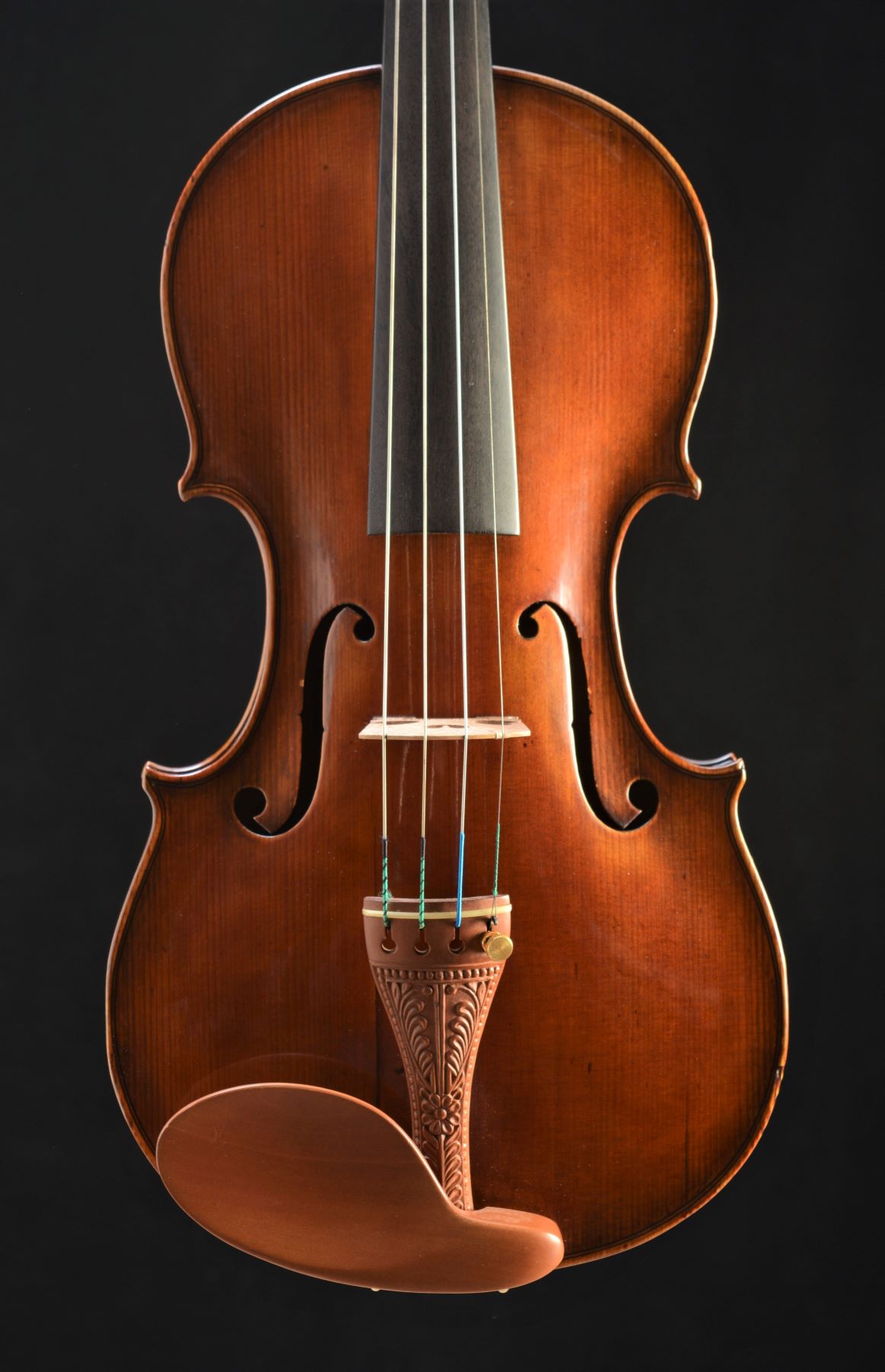
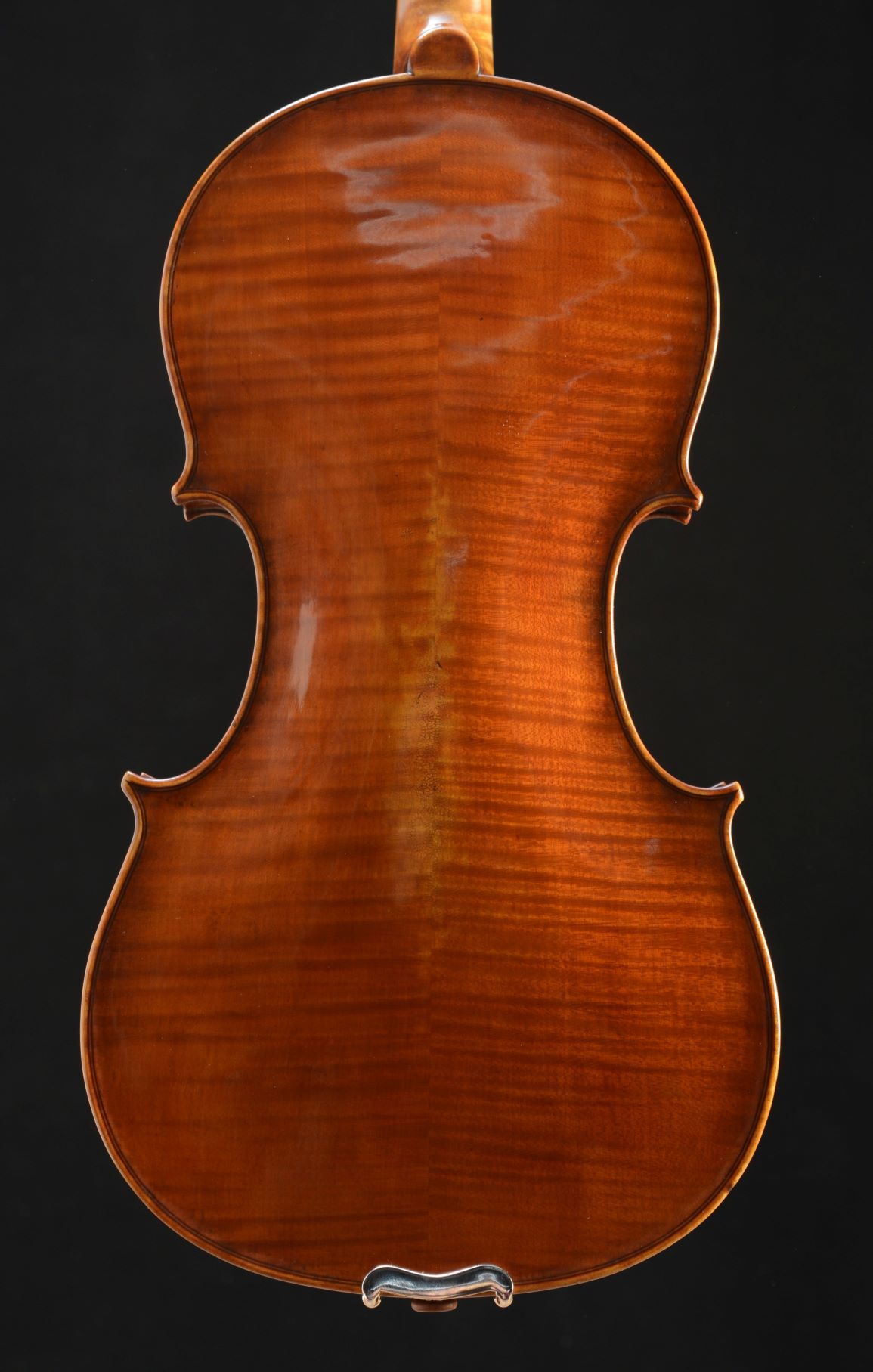
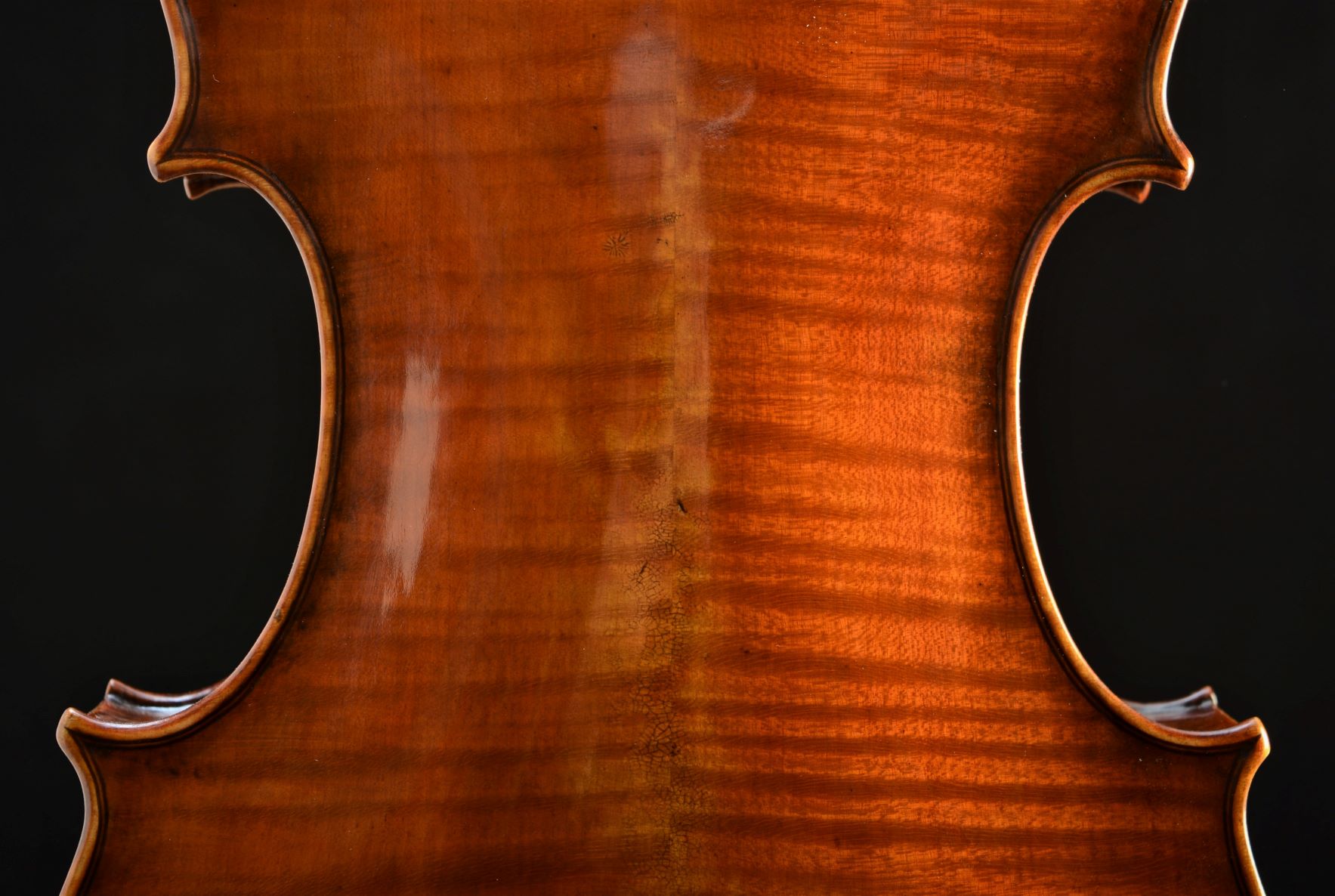
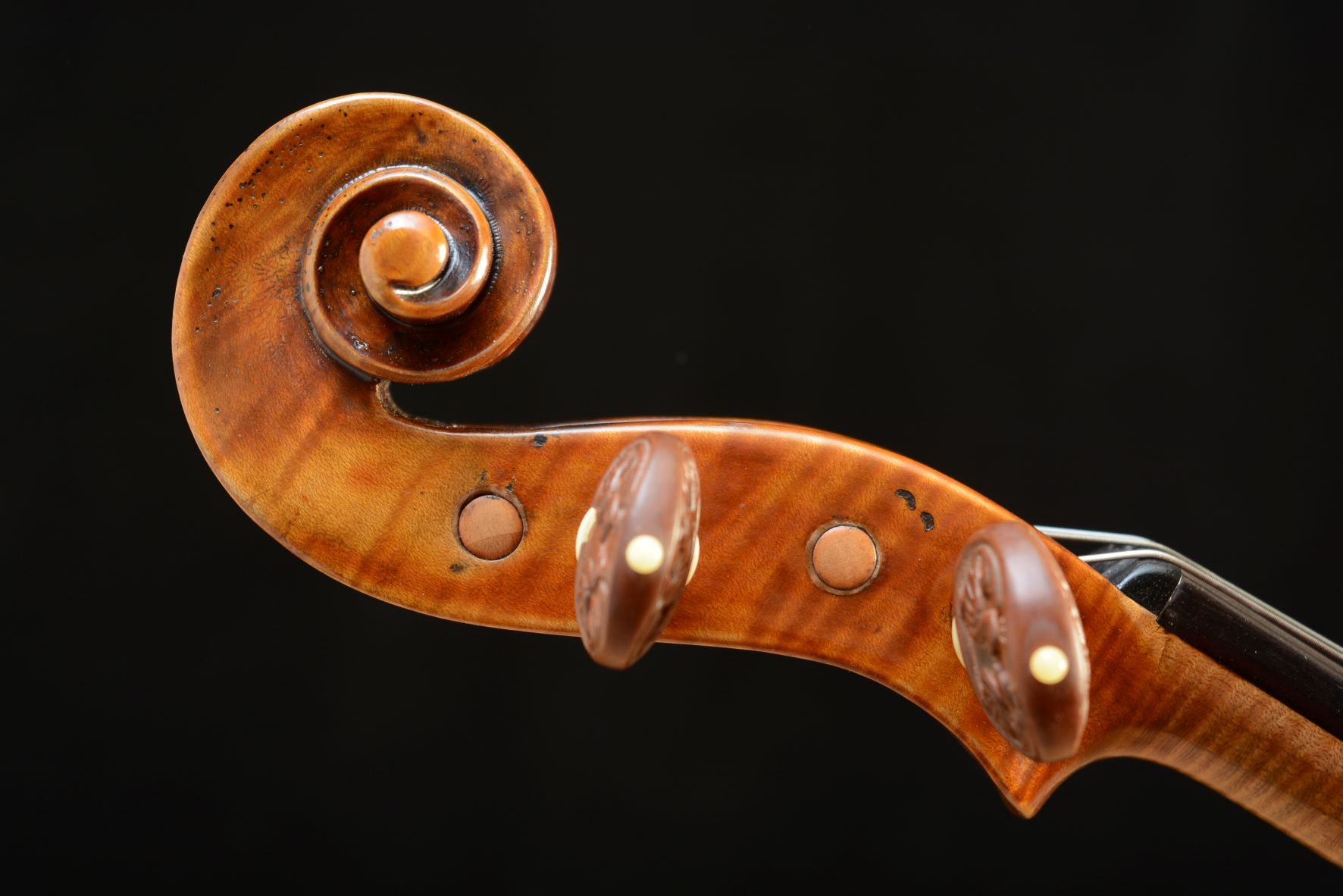
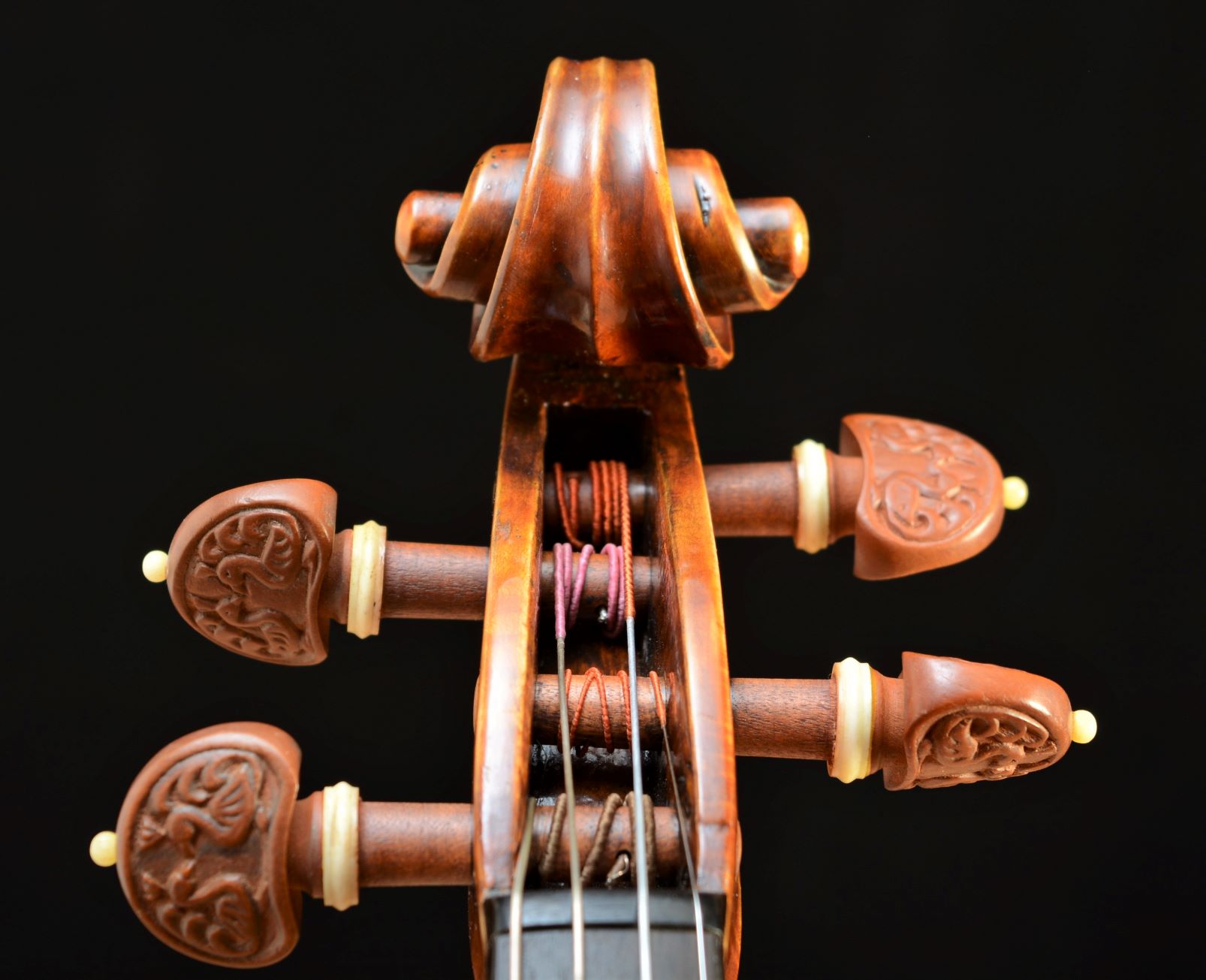
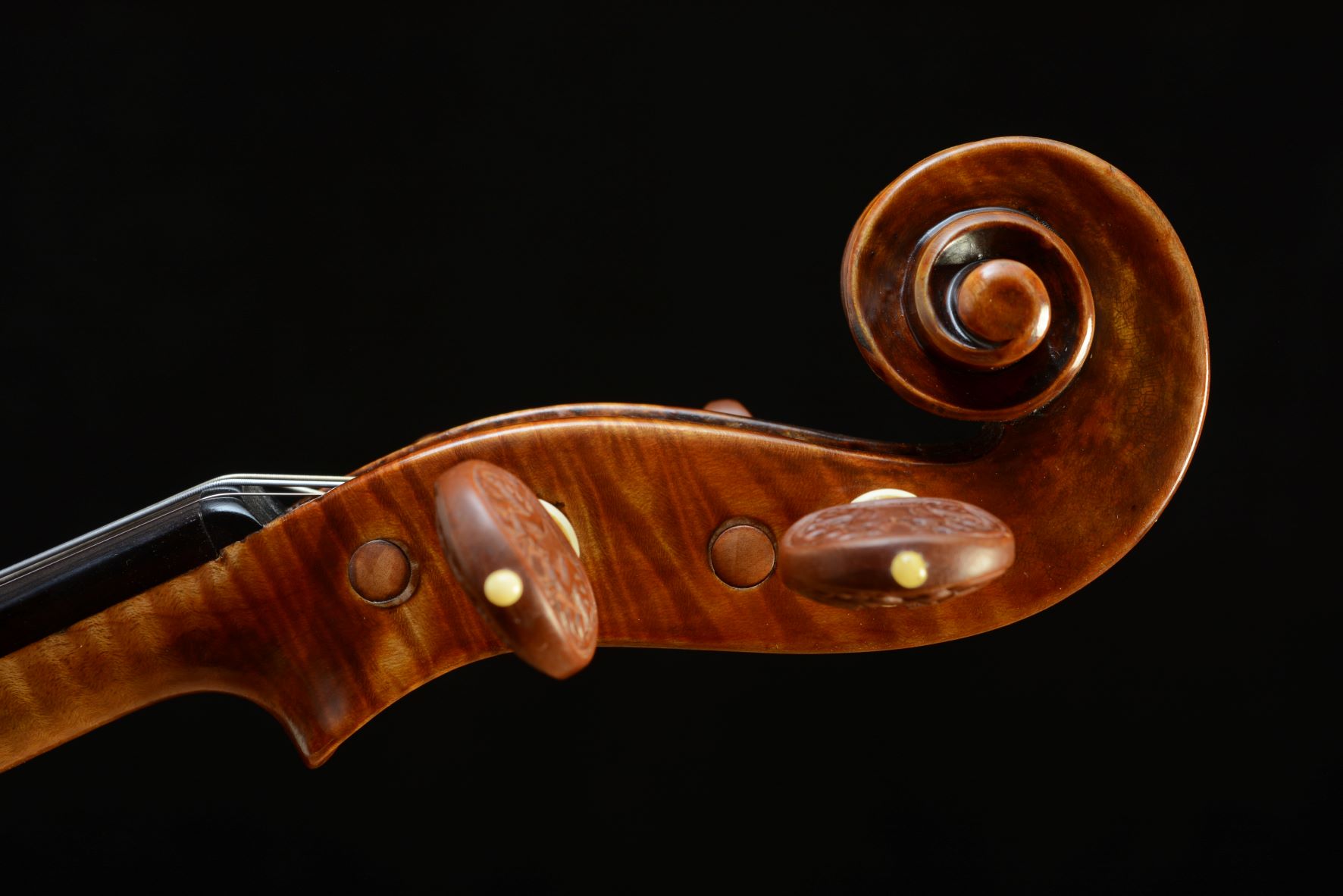
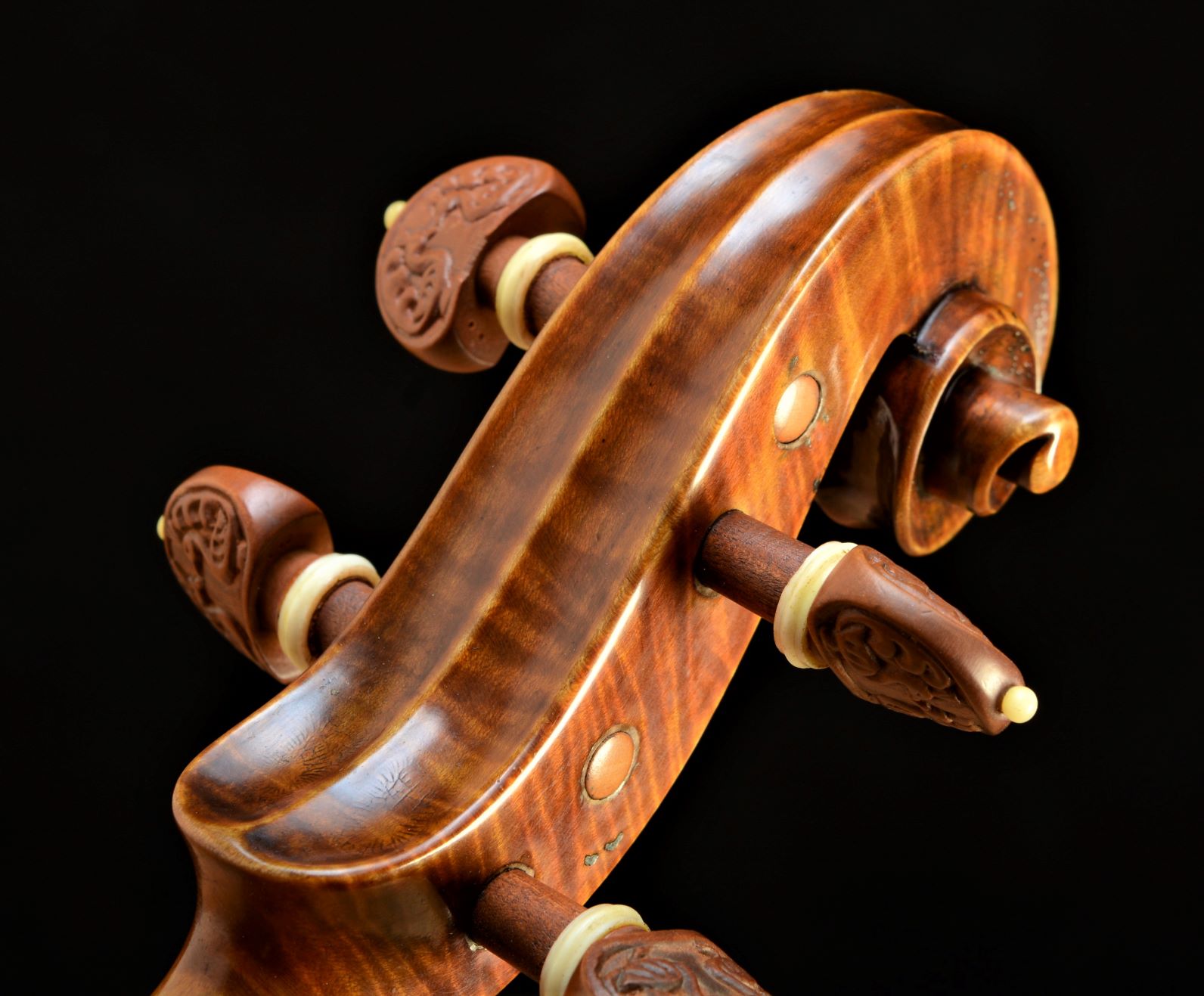
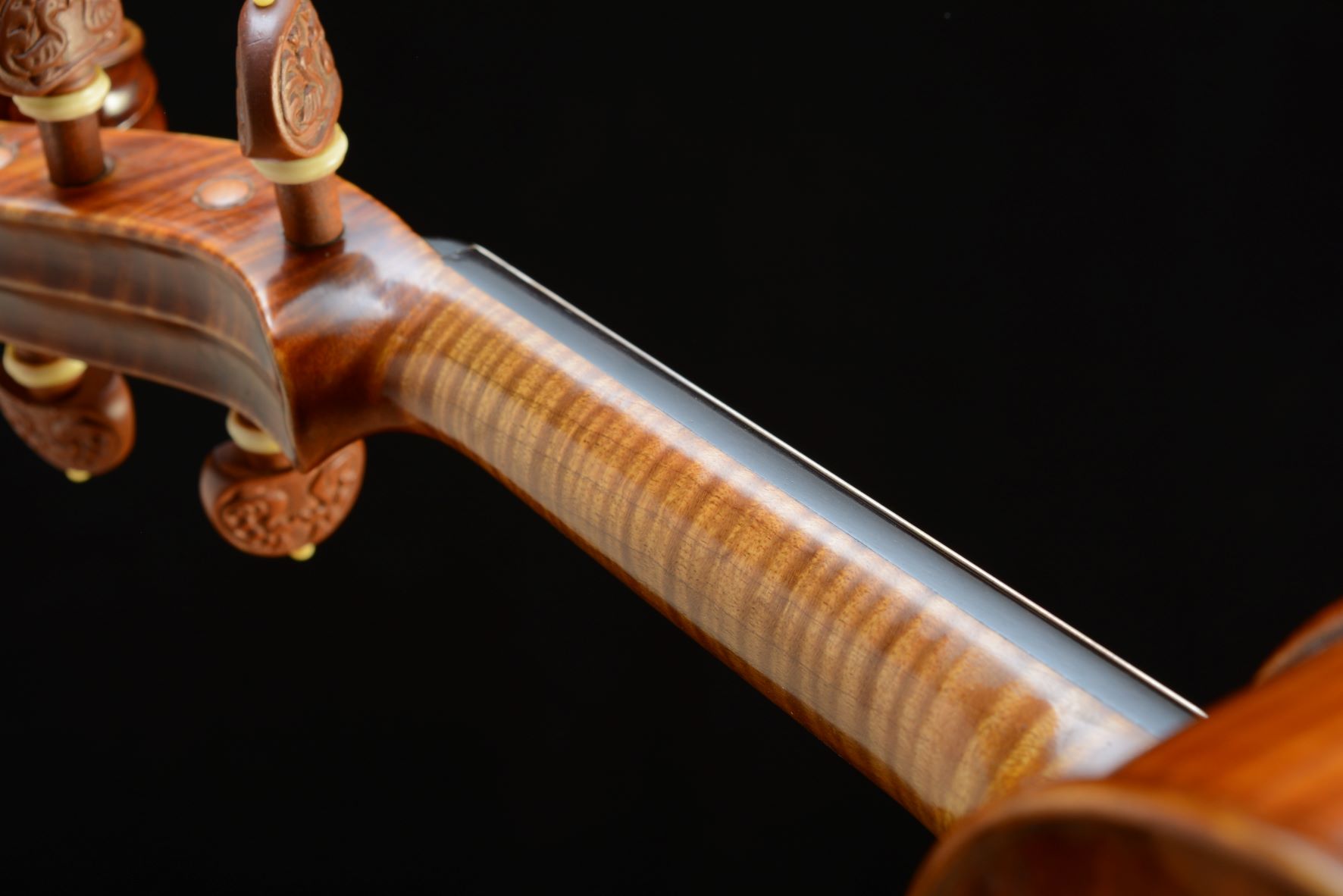
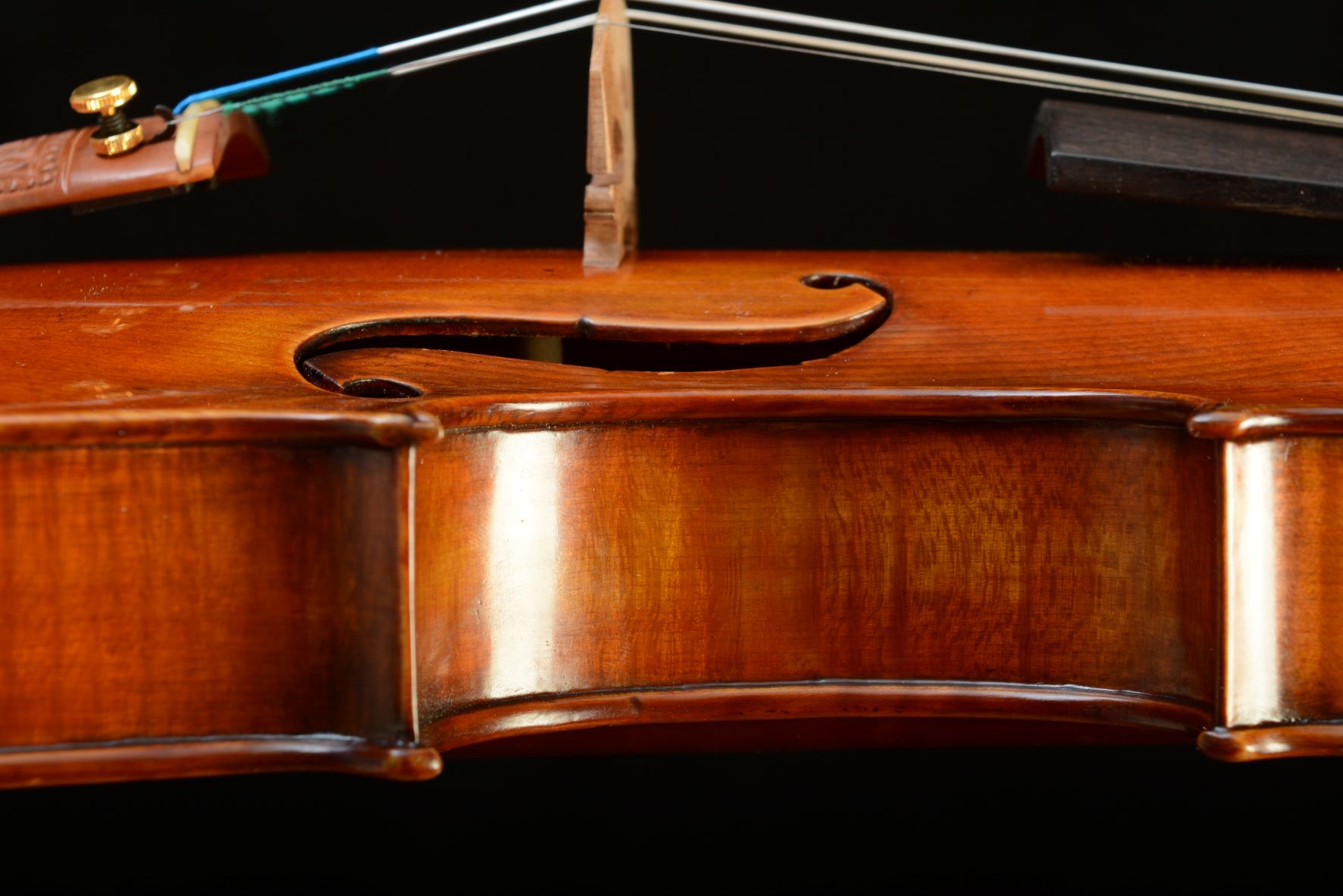
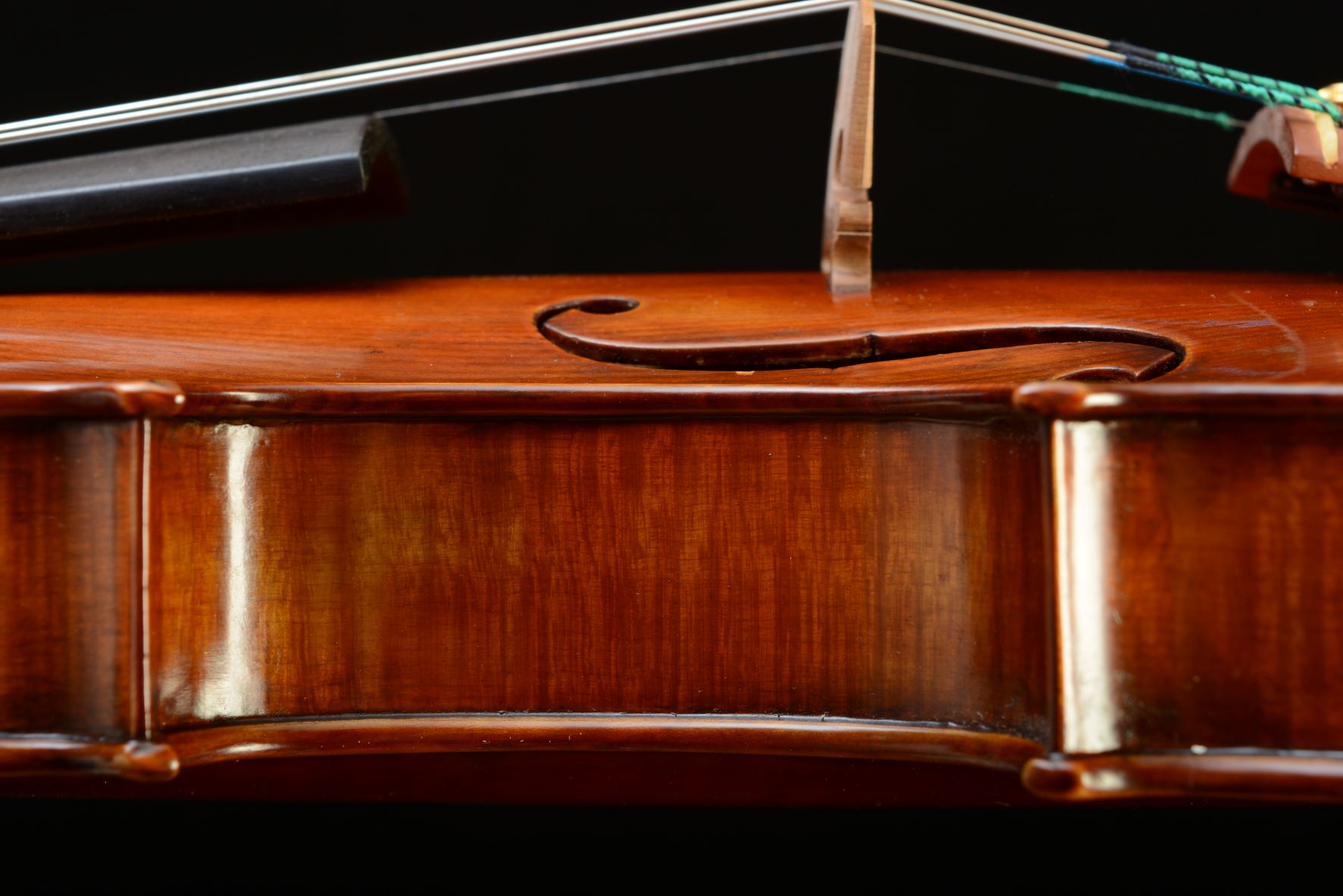
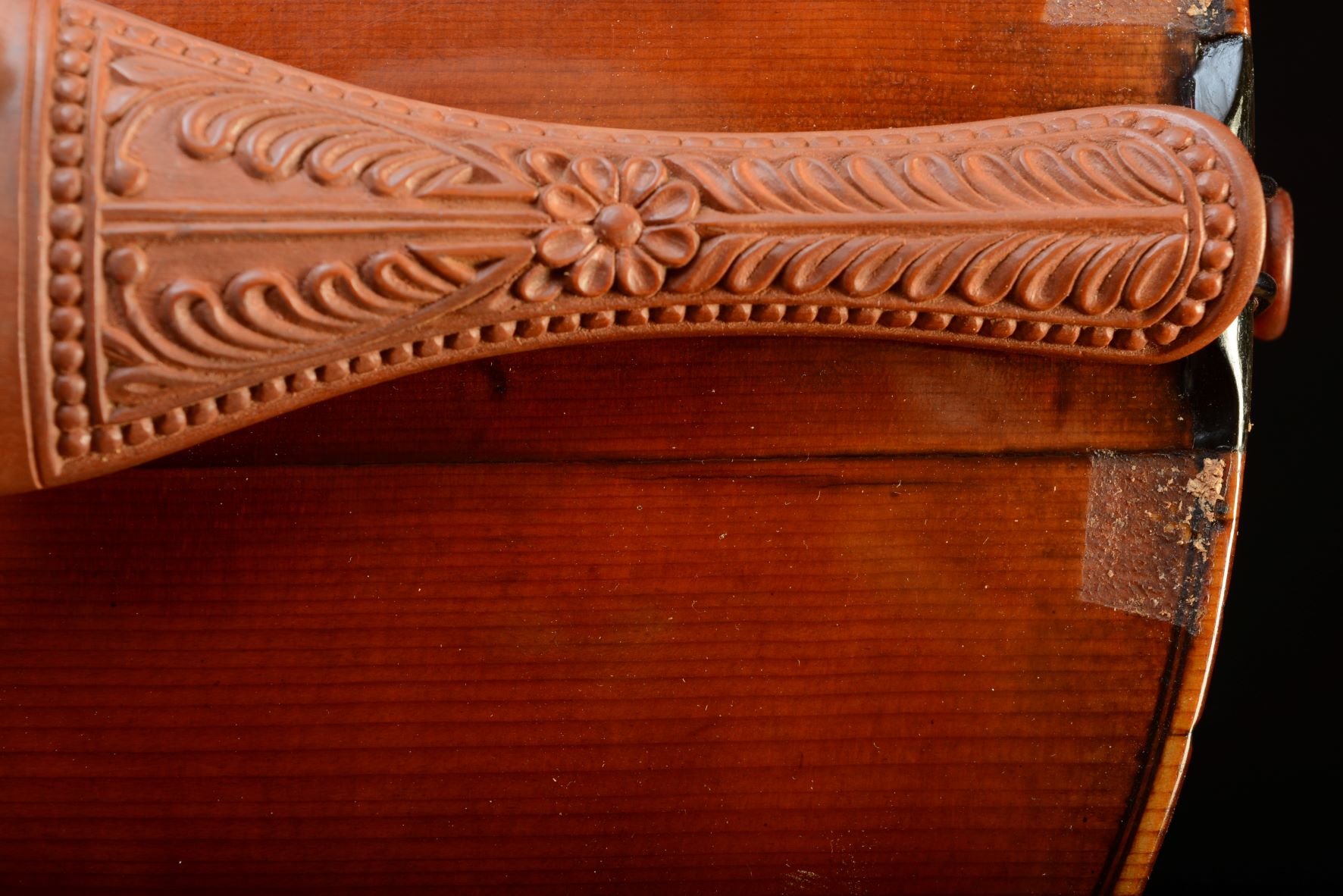
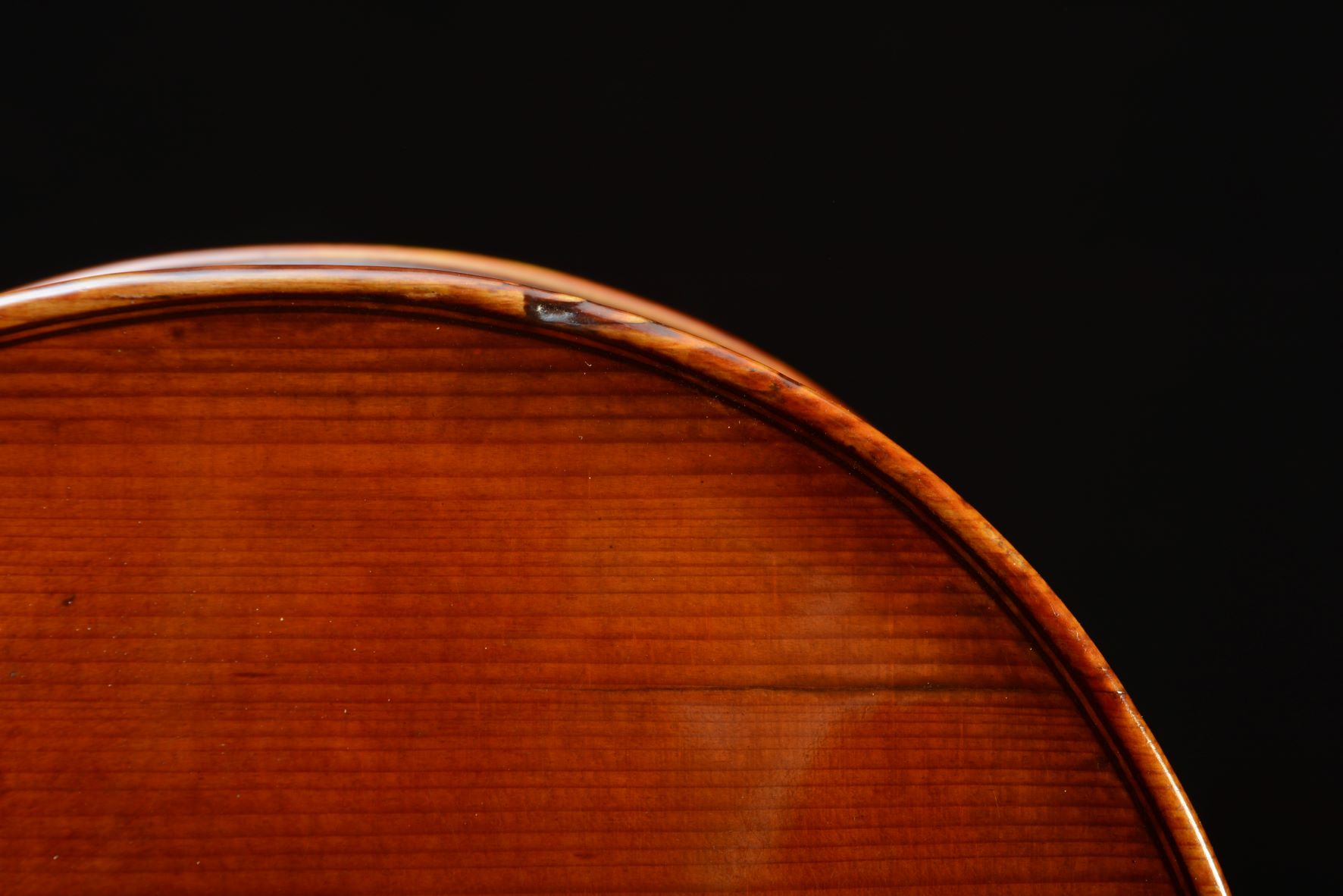
This 1938 Aubrey Dugarde French violin is a lovely, delicate,smaller instrument with a sweet voice. It’s been around the block with evidence of two cracks on the top, but they are holding firm. The varnish was a disaster (Sharpie retouching!), so I removed it back to the ground and gave it my own oleo-resin varnish and lightly antiqued it. This was my daughter’s first good full-size violin (good mojo — she is in the Philadelphia Orchestra now!).
This violin is in good working condition and comes with a nice Bobelock case: $2,400
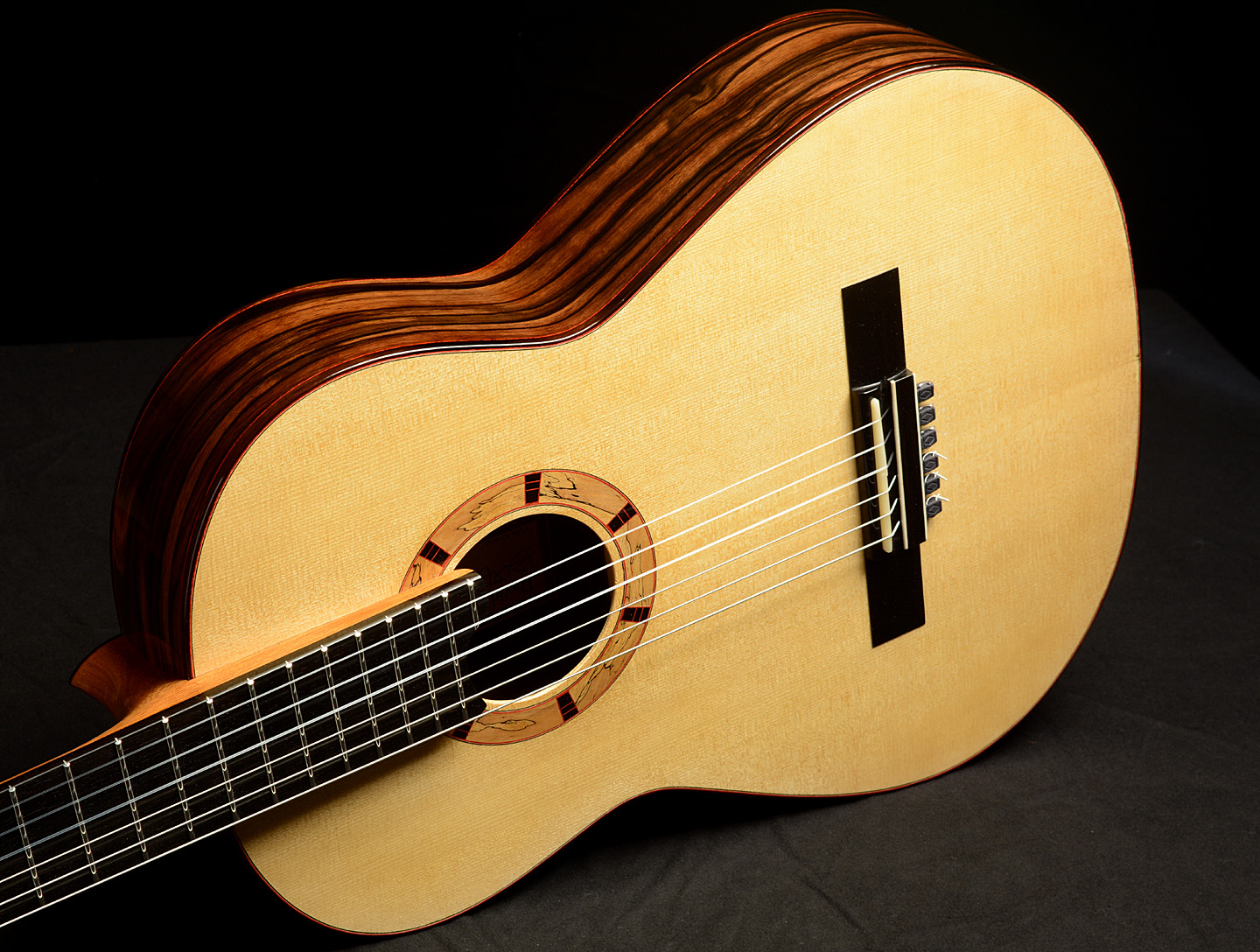
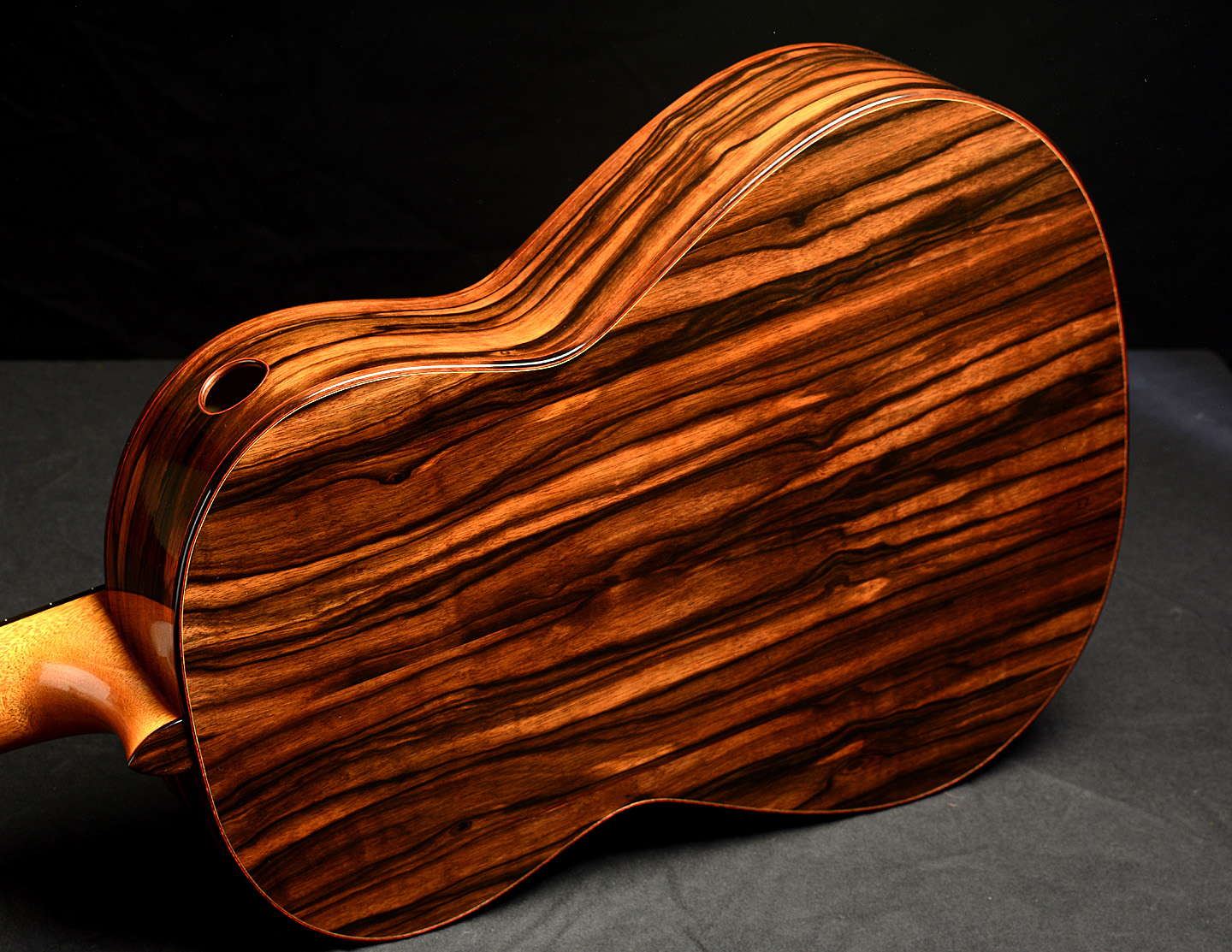
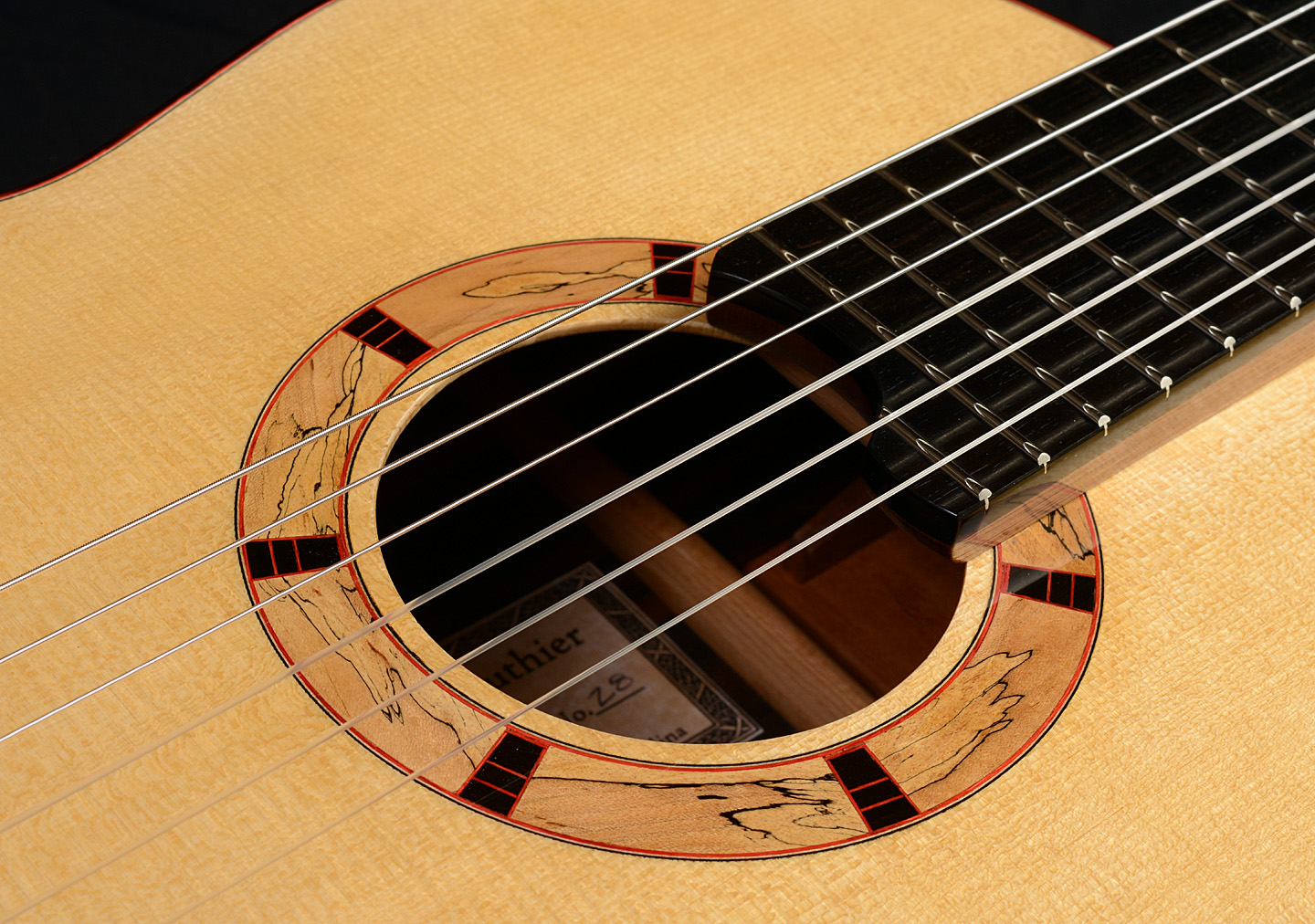
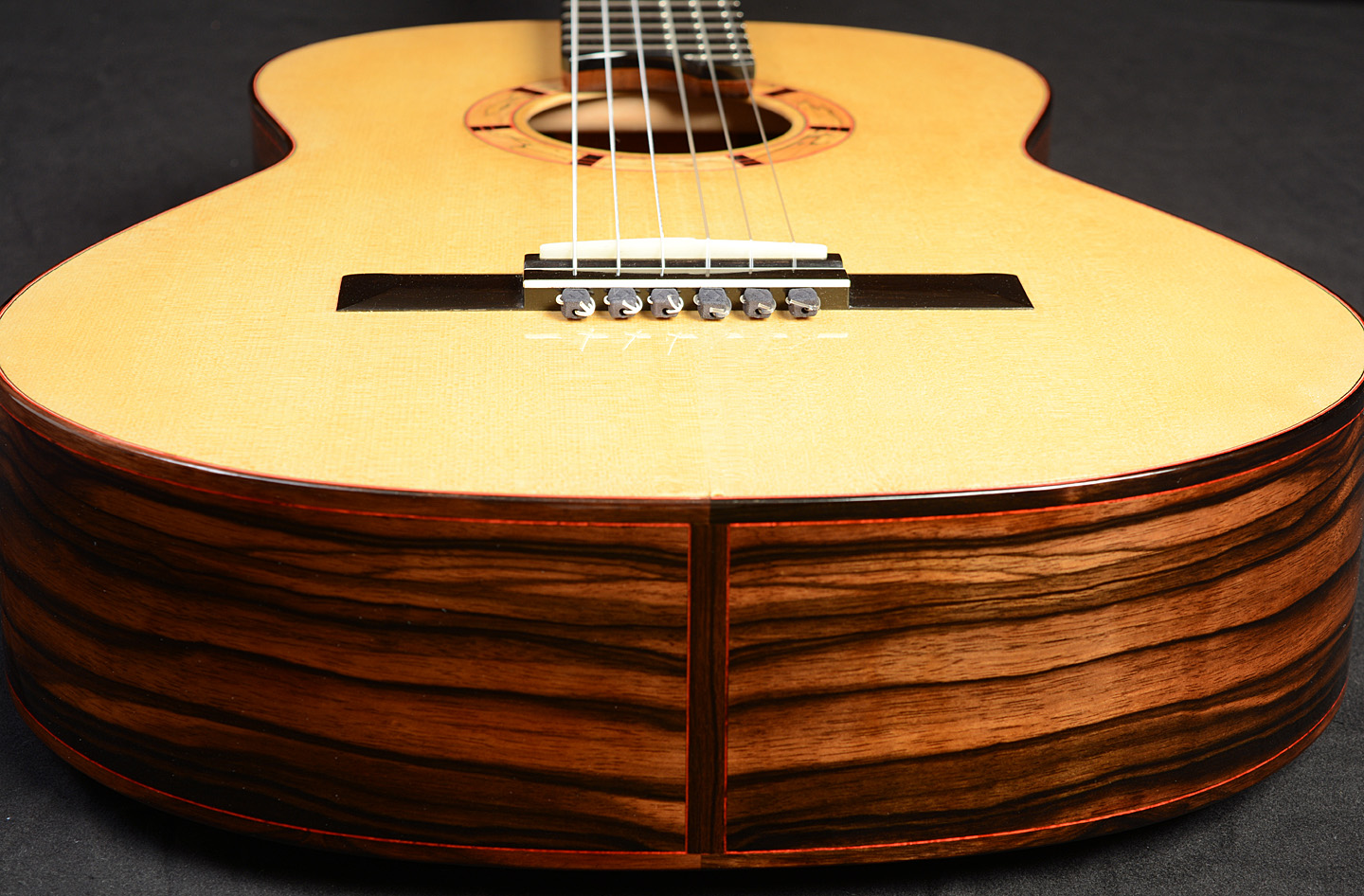
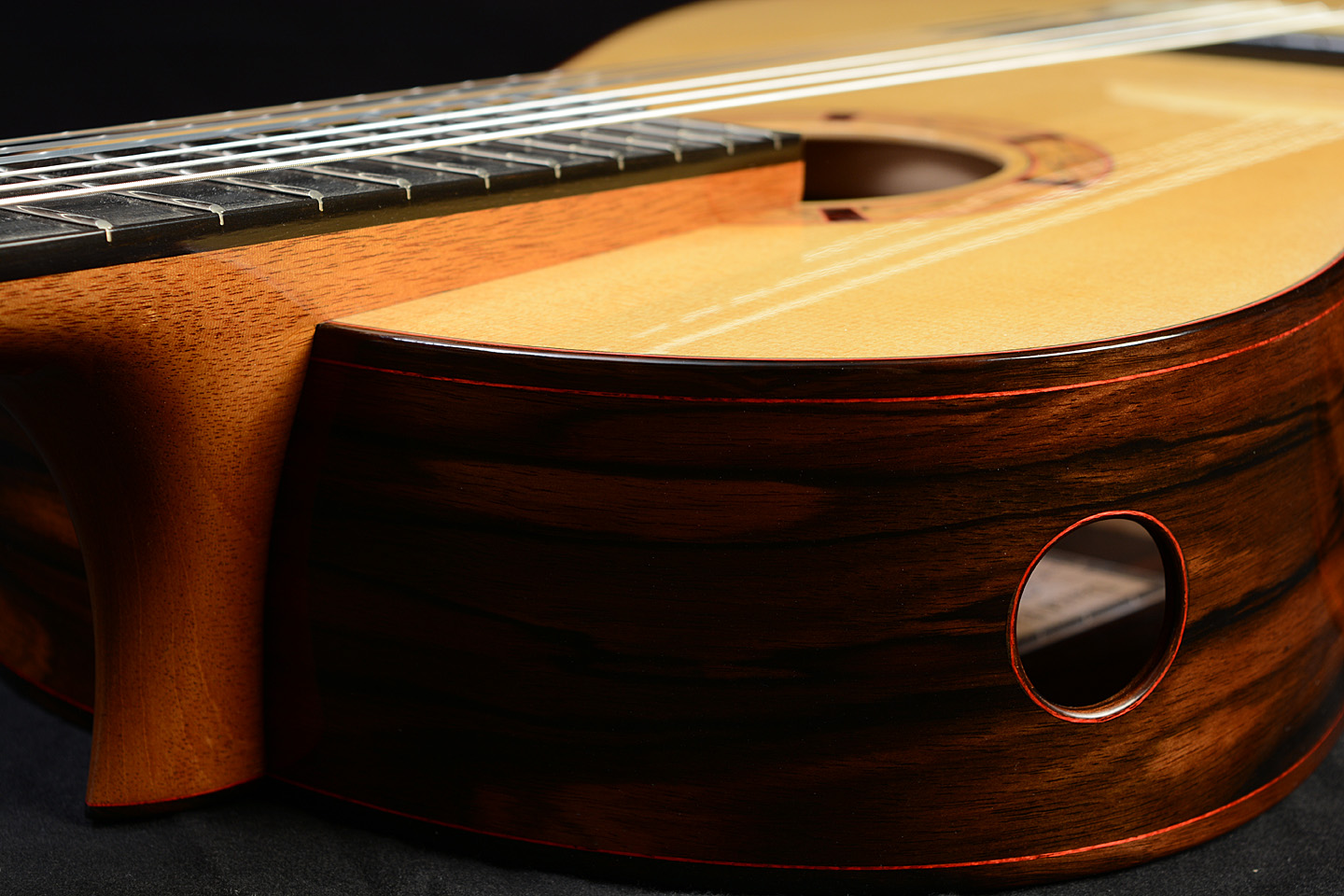
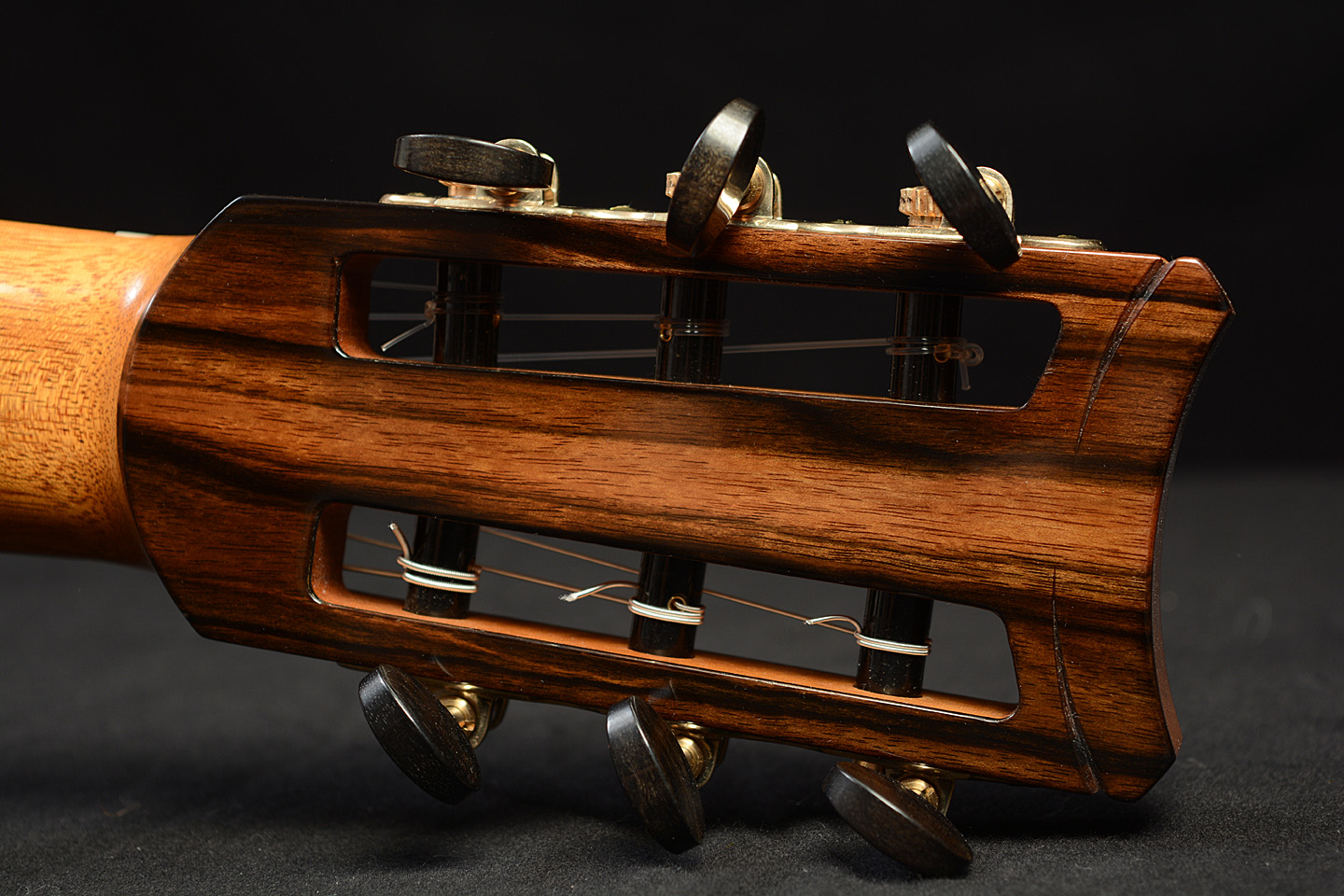
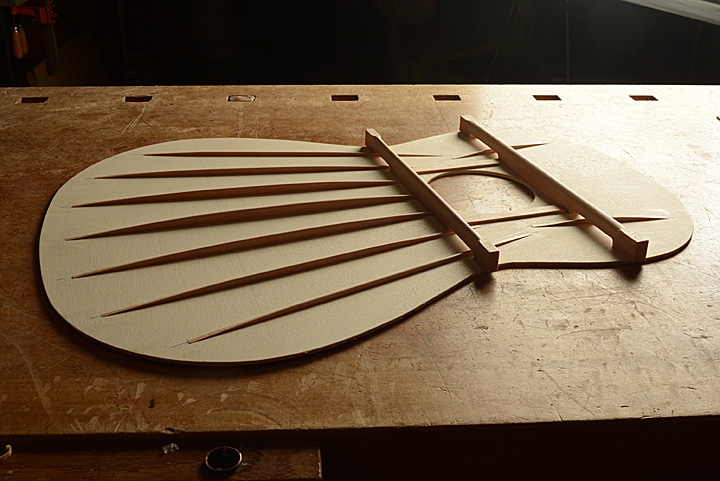
For this instrument I incorporated many elements found in contemporary classical guitars: elevated neck, sound-port, carbon-fiber neck reinforcement, and ultra-stiff laminated sides (ebony inside and out with cross-ply of western red cedar). It features an Englemann spruce top, and back and sides of Macassar ebony.
A group of experienced guitarists had a chance to review the instrument (including a former concert artist and GFA prize winner). Some of the comments:
- “All of the players were immediately impressed not only by the beauty of the instrument. It is soooo loud! It has a clear, brilliant, and balanced sound that separates voices wonderfully.”
- “…loved the port…they could hear detail in the tone that they’ve never been able to hear on other guitars.”
- “…never heard a guitar that sustains individual notes like #28”
$8,000 with high-quality hard-shell case.
By David Finck with a foreword by James Krenov. Available at Lost Arts Press.
From the publisher:
No matter what sort of handplane you use, “Making & Mastering Wood Planes” is perhaps the best guide available to understanding, tuning and using these tools at a high level.
Written by a graduate of the College of the Redwoods (now The Krenov School), “Making & Mastering Wood Planes” is ostensibly about the laminated handplanes that James Krenov made famous in the 20th century. But author David Finck decided to probe far deeper into the topic – so much so that this book is actually an excellent primer on handwork itself.
It begins with a discussion of wood as a material – both for making a plane and for working it with a plane. Then he delves into the basic tools and techniques one needs to begin making a plane and making furniture. And the reader is instructed on how to tune up a metal plane, plus how to grind and sharpen its iron before building a laminated wooden plane.
The building of planes is, of course, covered in immense detail. Even though laminated planes are simpler than traditional wooden planes, there are many fine points to understand and master. Most helpful is the section on troubleshooting a wooden plane and the steps required to get it back in perfect tune.
Finck then proceeds to discuss how to use planes to dress the edges, faces and ends of boards, plus he addresses a variety of specialty techniques – planing thin stock, shooting ends, planing large surfaces and curved edges.
Finally, Finck covers scraping, both with a cabinet scraper and scraper planes.
“Making & Mastering Wood Planes” is in its fifth printing and has sold thousands of copies worldwide. When the author considered letting it go out of print, we offered to keep it available. We also sought to upgrade the book’s mechanical characteristics. The book’s pages are sewn for durability. The paper is slightly thicker and whiter. We upgraded the binding to a hardback. And we moved production from overseas to the United States.
This book has been in our personal library for almost 20 years – we wore out our first copy. And now we are pleased to offer it to you under the Lost Art Press imprint.