David Finck ⩙ Luthier

Hardanger d'Amore
Cello d'Amore

Testimonials

The hardanger d'amore that David made for me has quickly become my favorite modern instrument. Unlike many instruments with five playing strings, it does not suffer from lack of resonance or power in any register, and the five sympathetic strings give it a beautiful glow and aura. I use the instrument in a number of contexts: folk, early music, and even some contemporary music. The instrument has exceeded all my expectations for tone, power, and versatility. I could not recommend David's craftsmanship more highly."

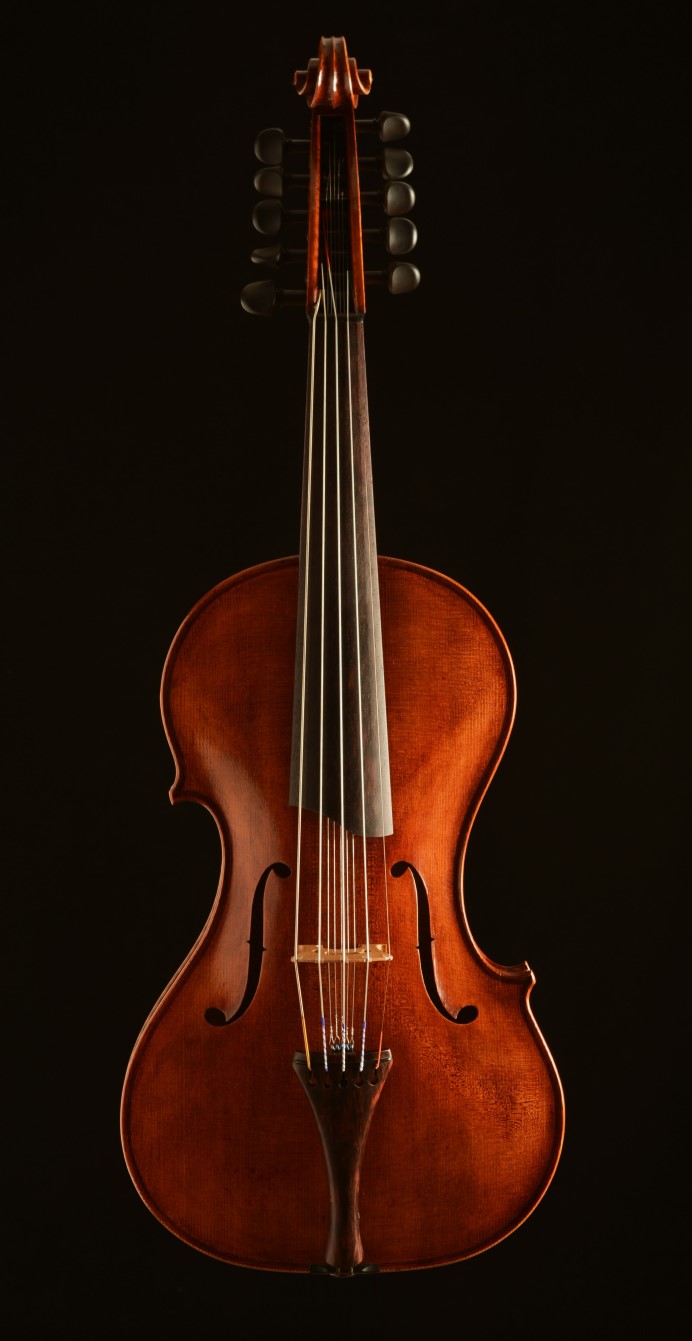
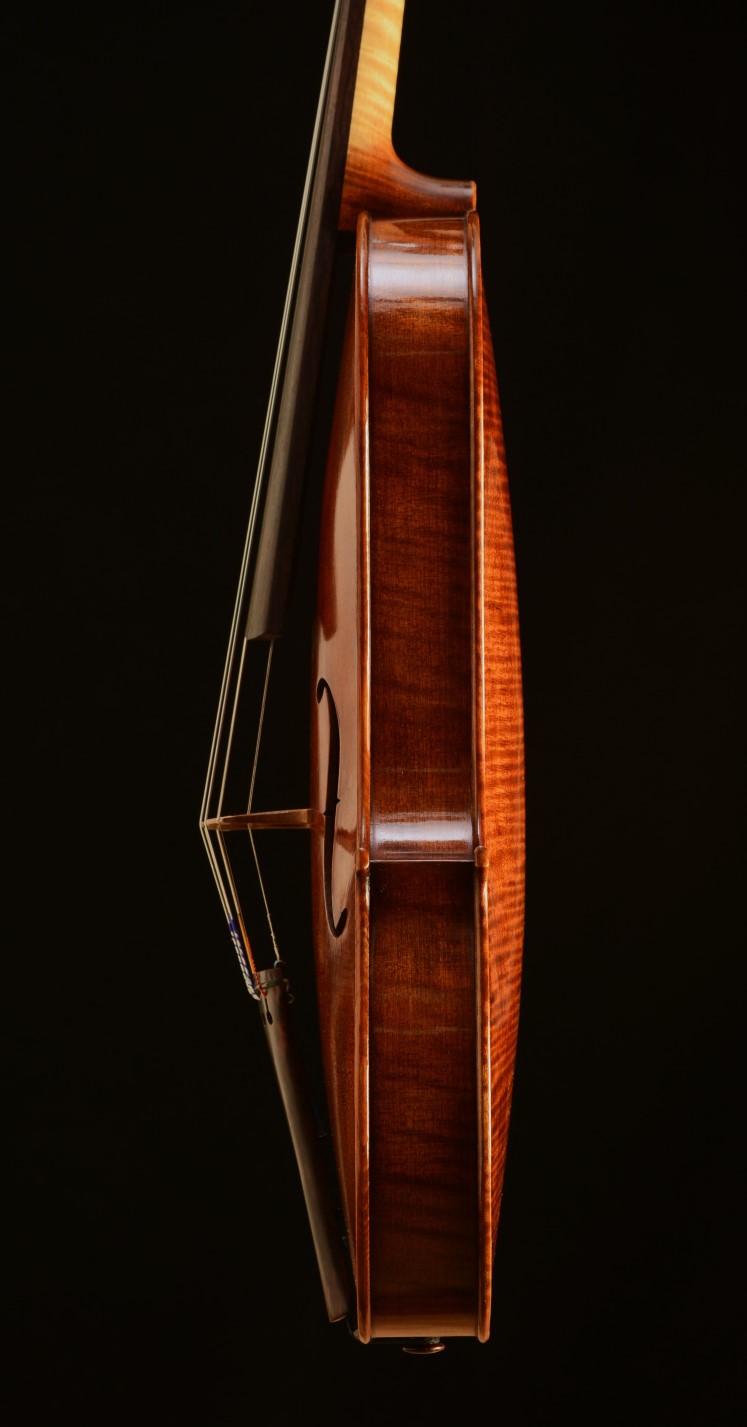
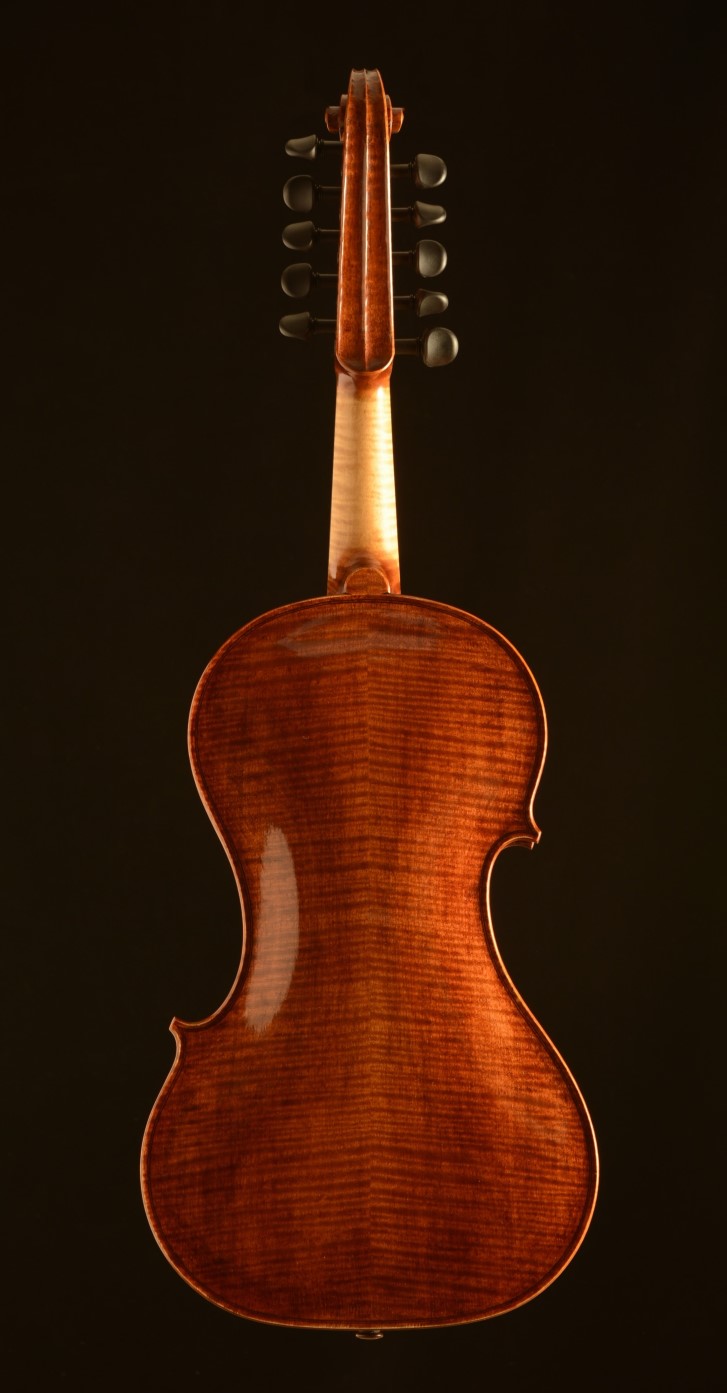
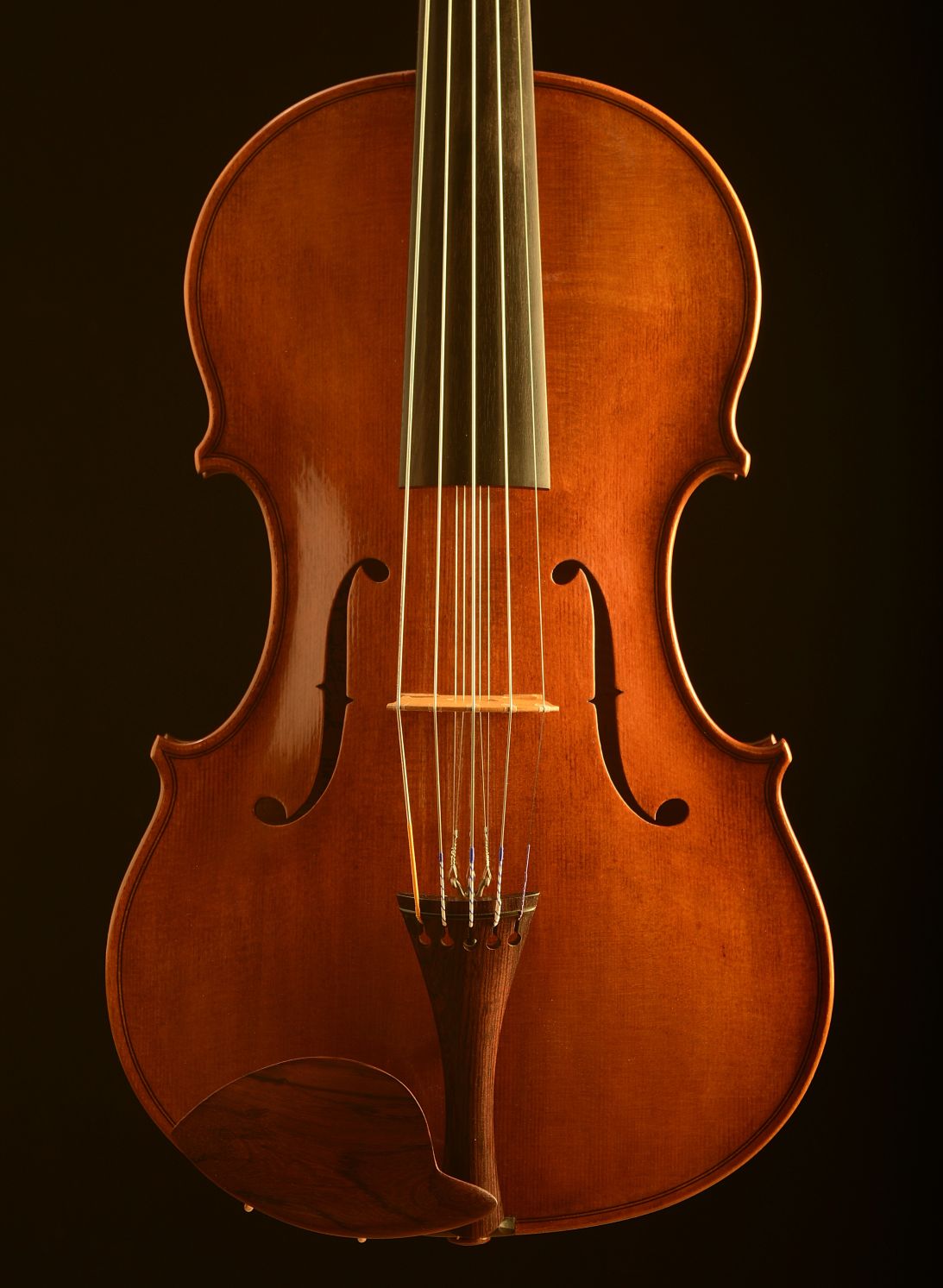
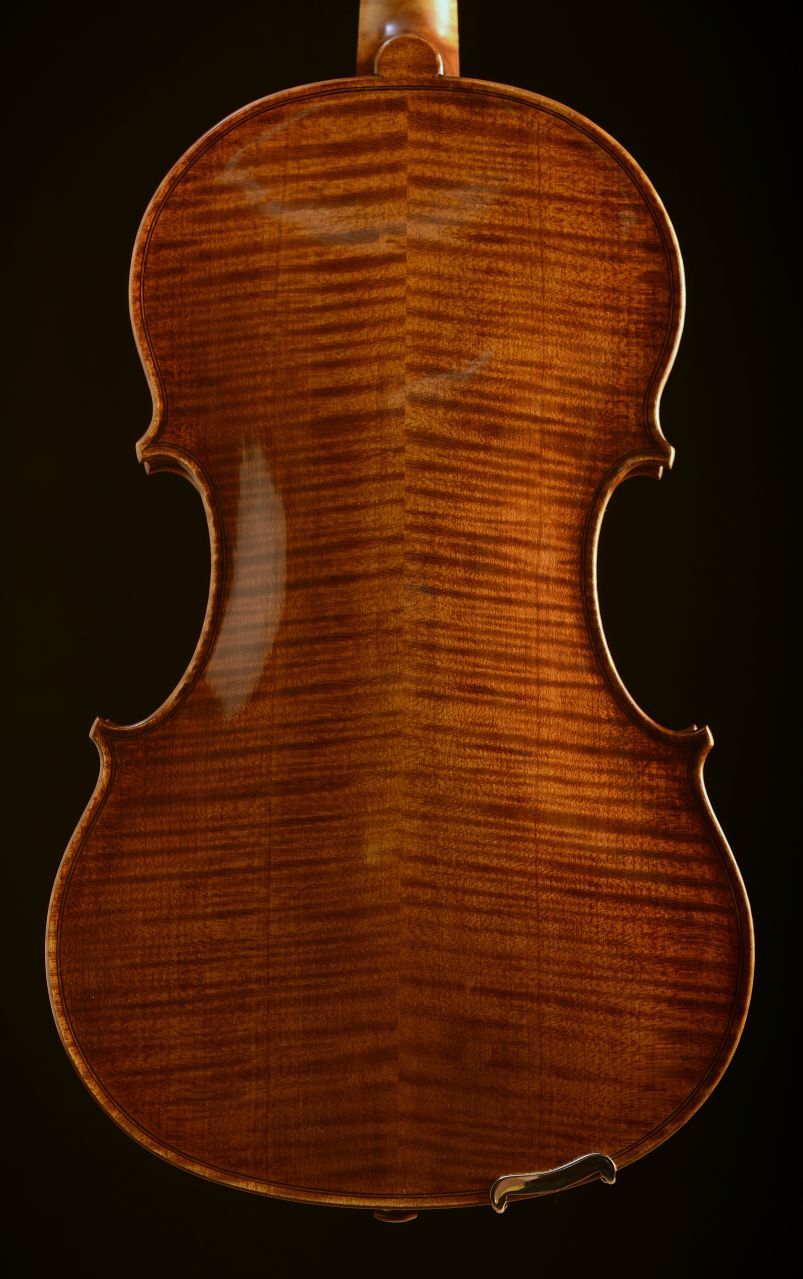
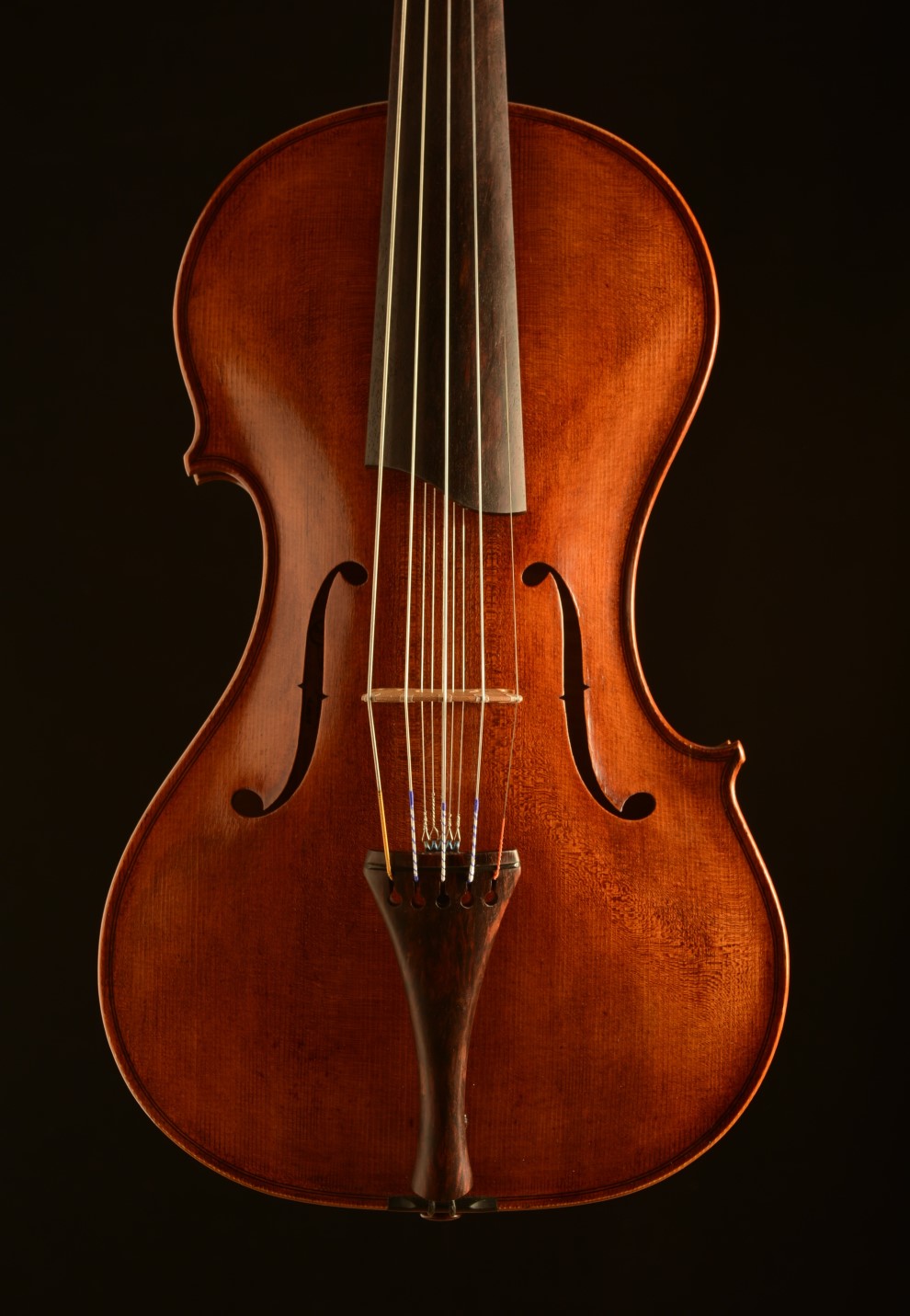
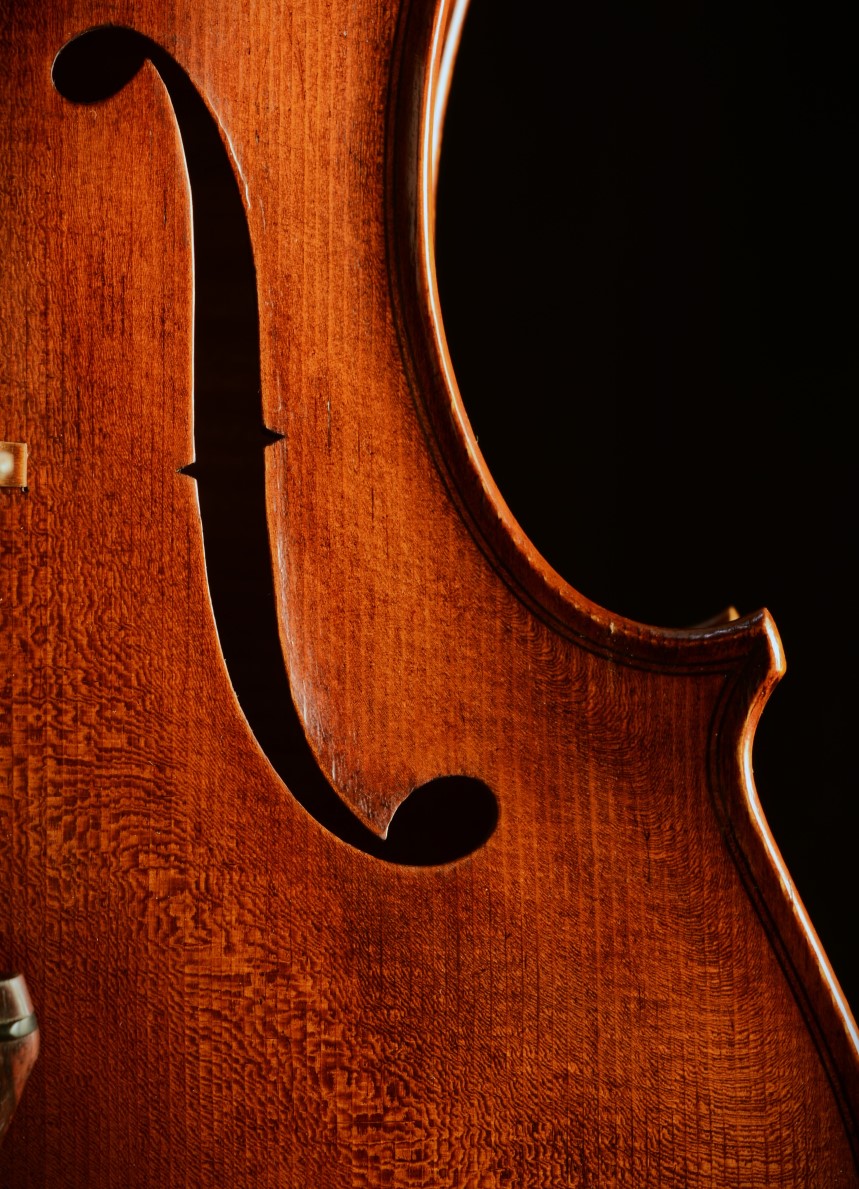
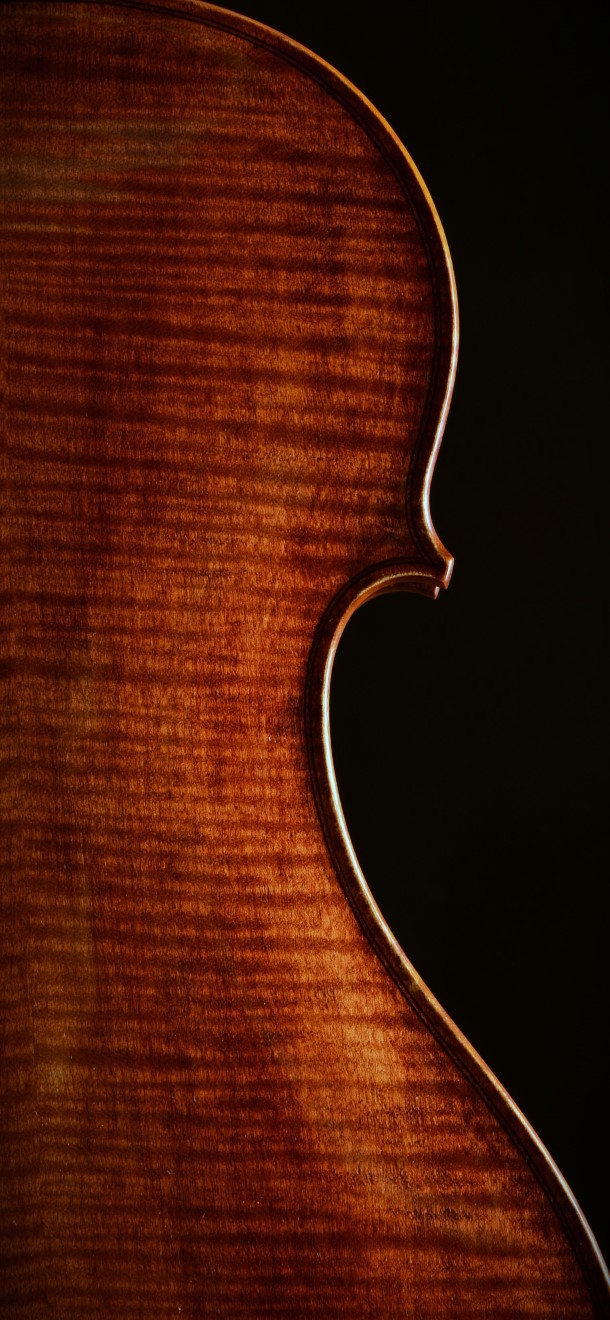
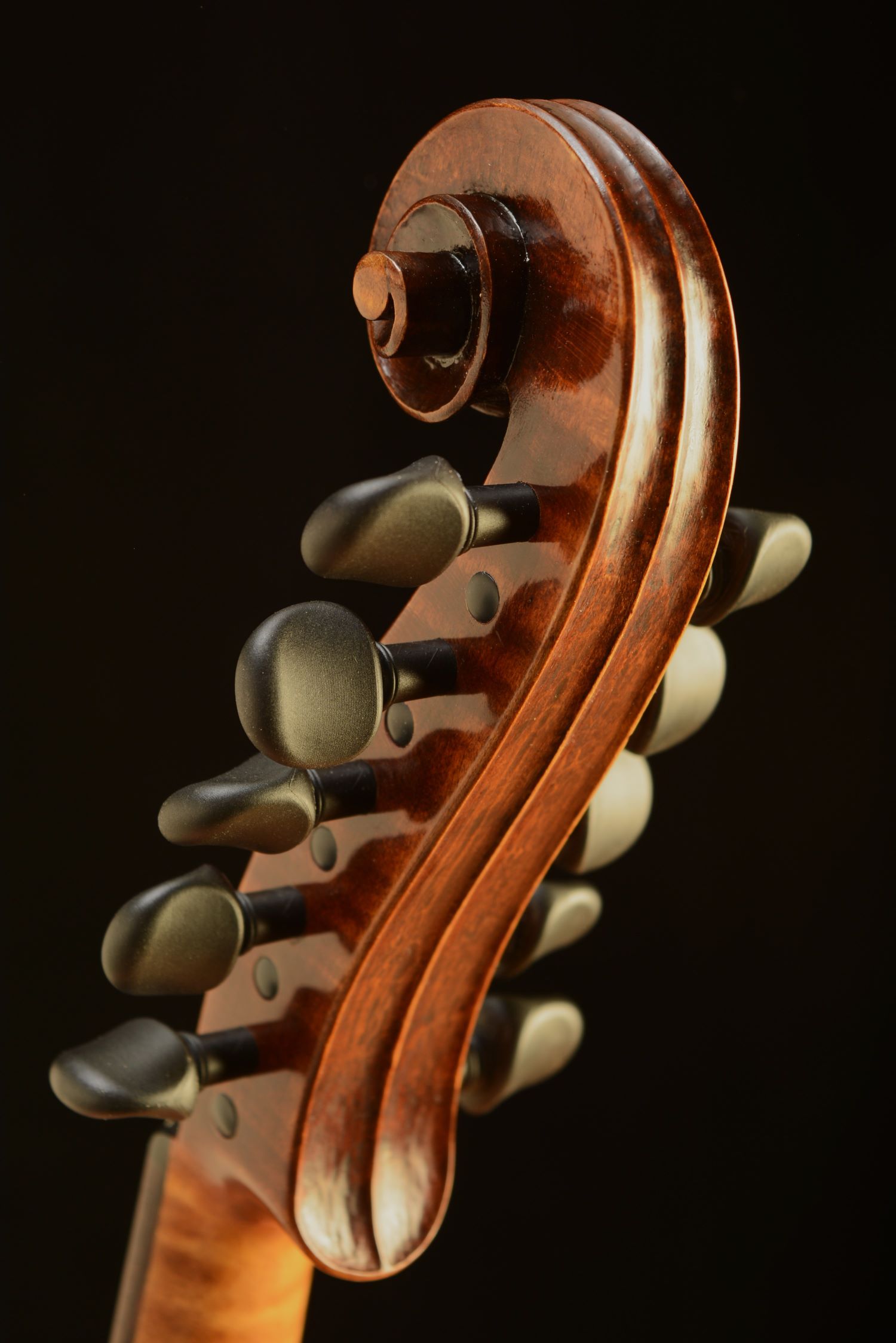
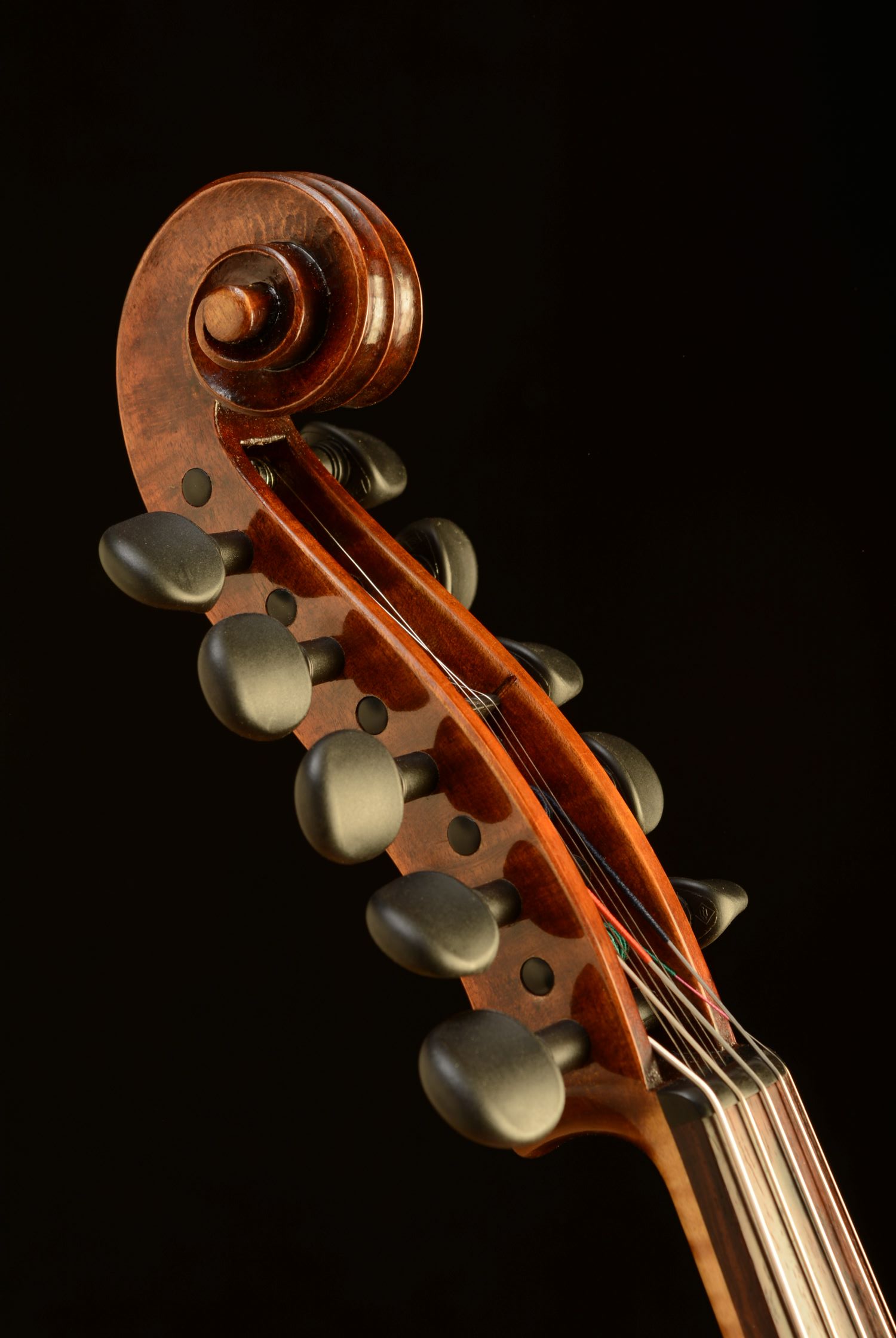
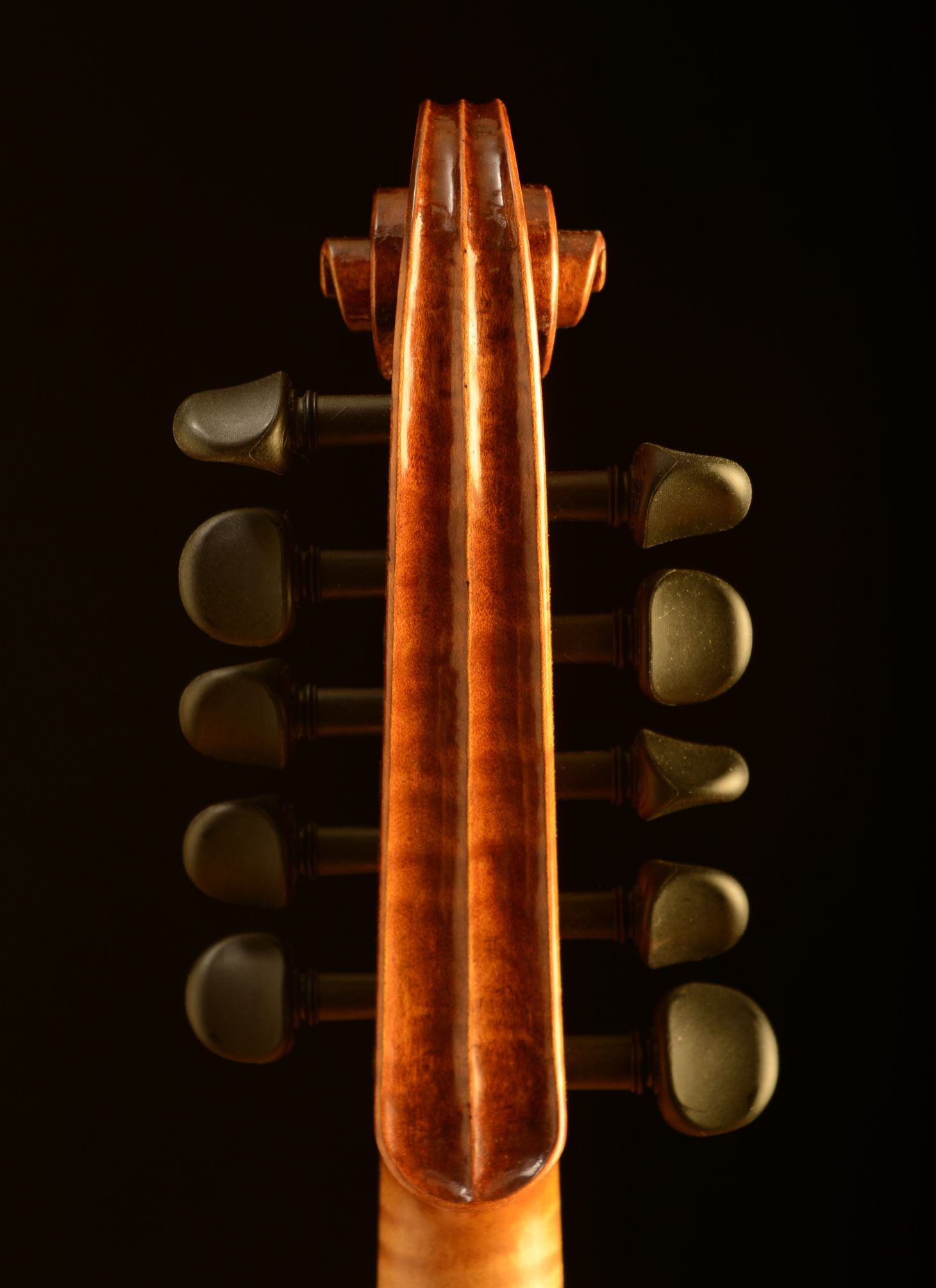
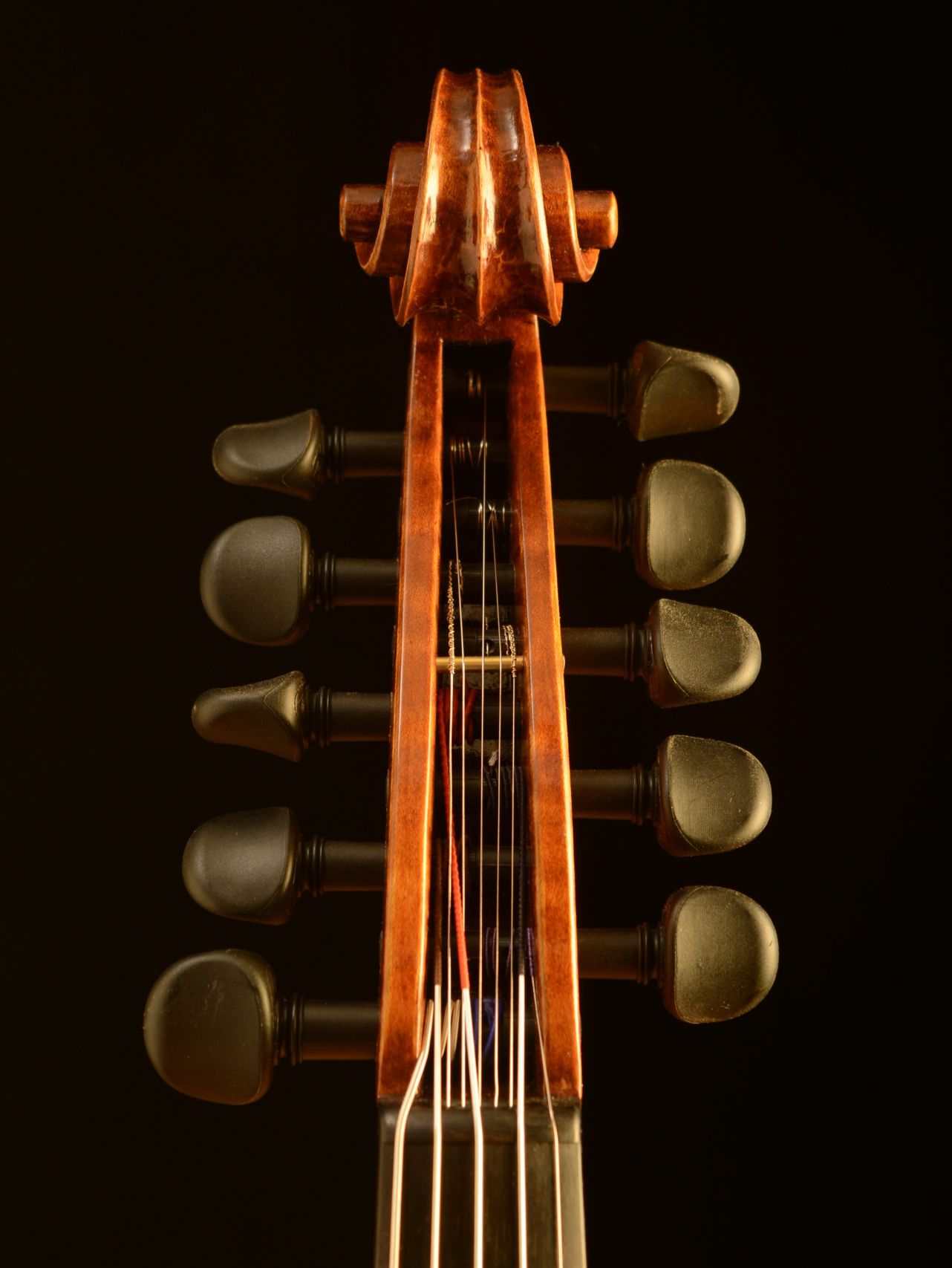
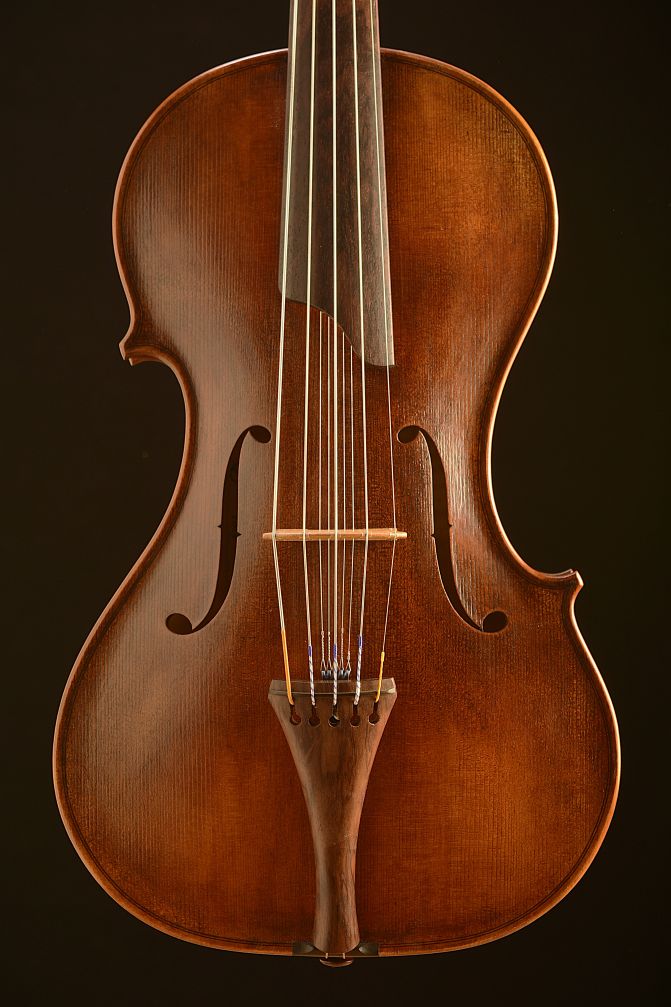
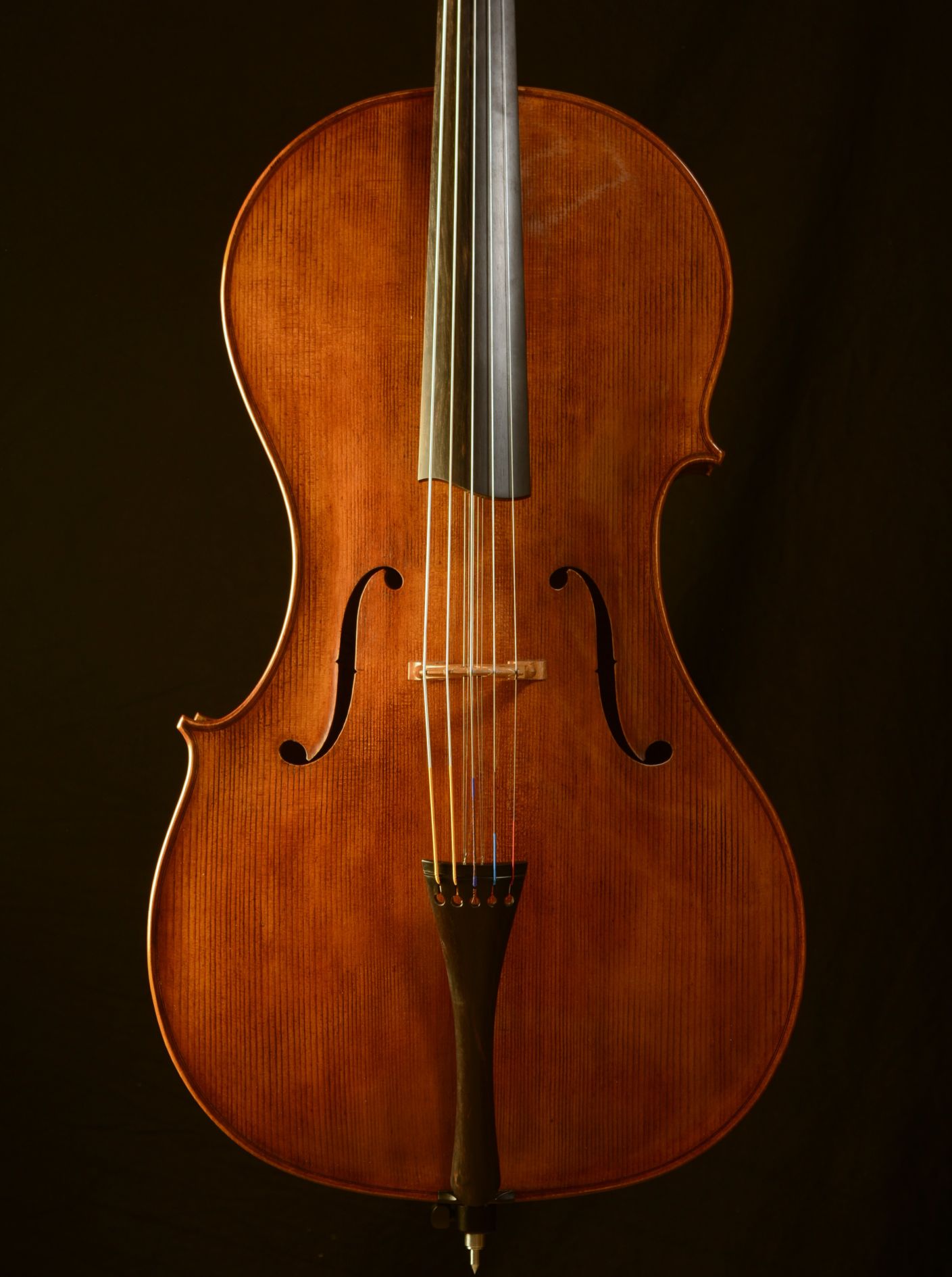
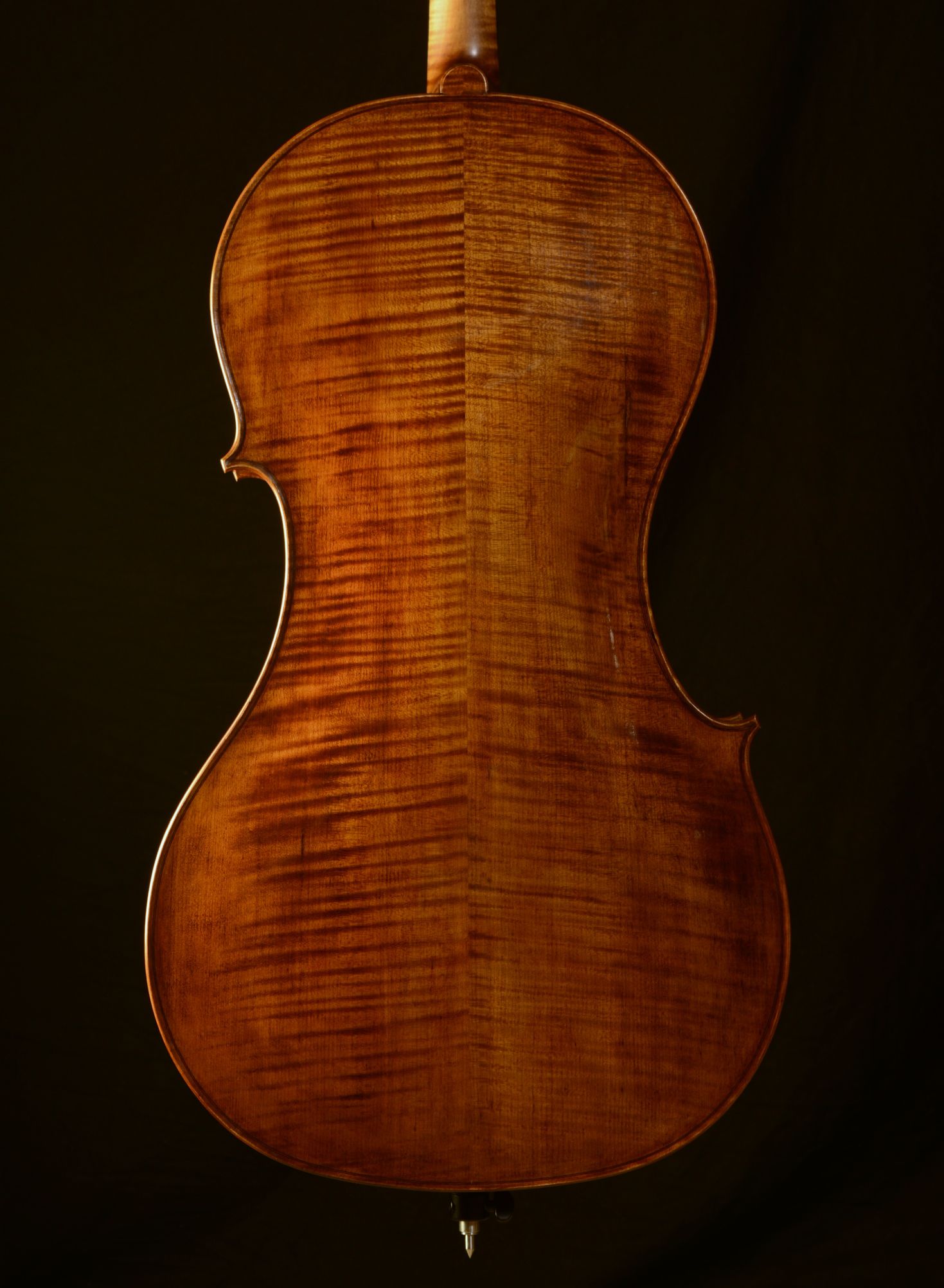
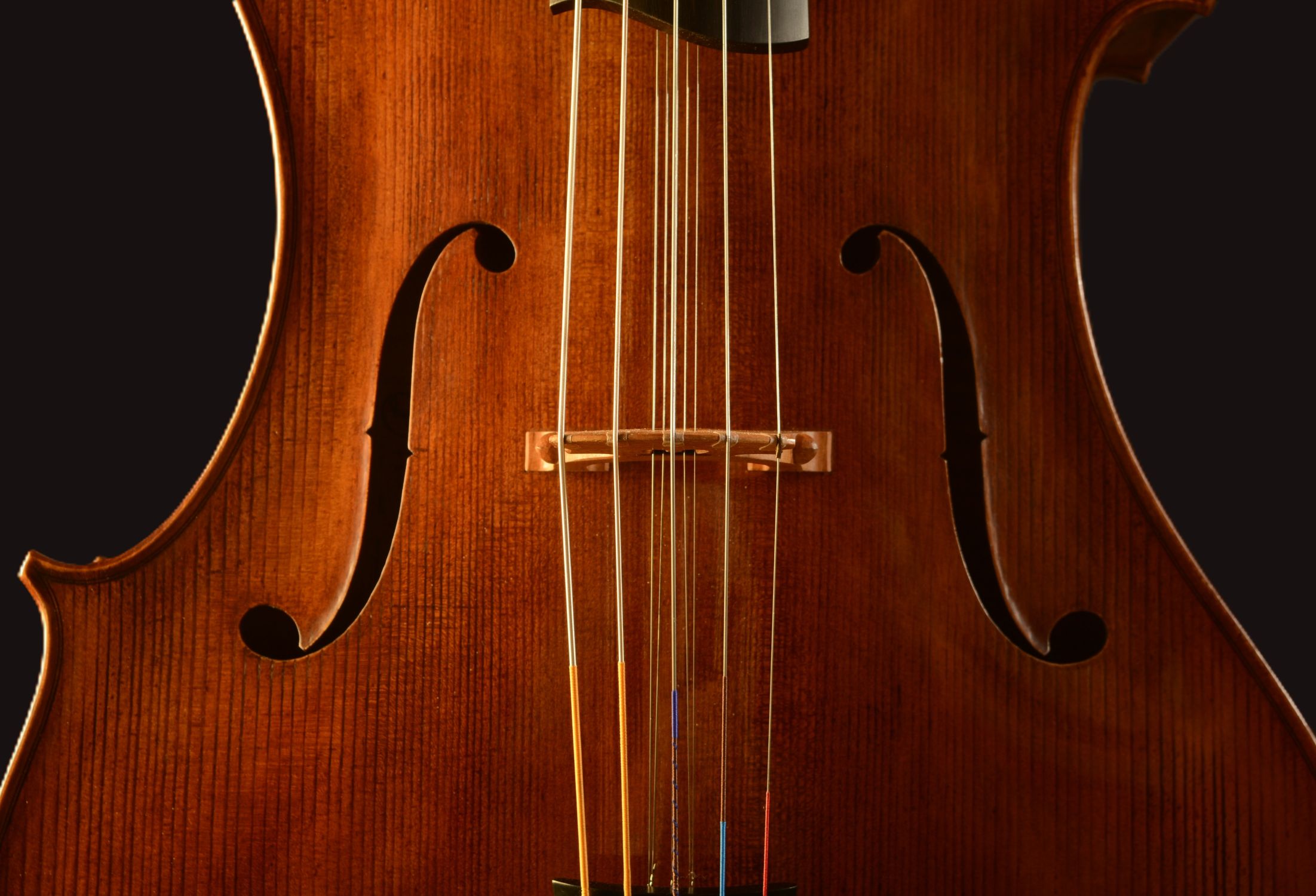
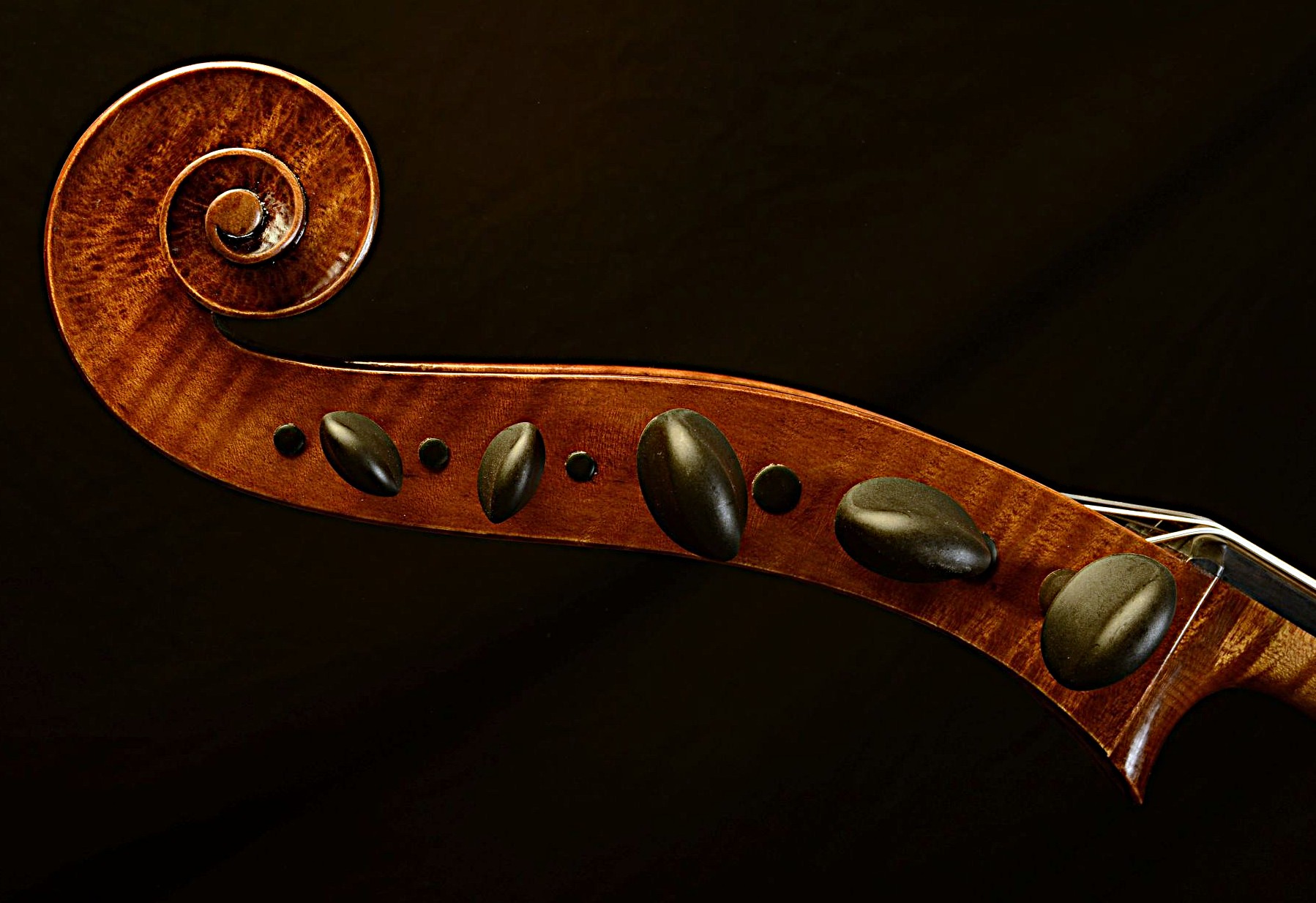
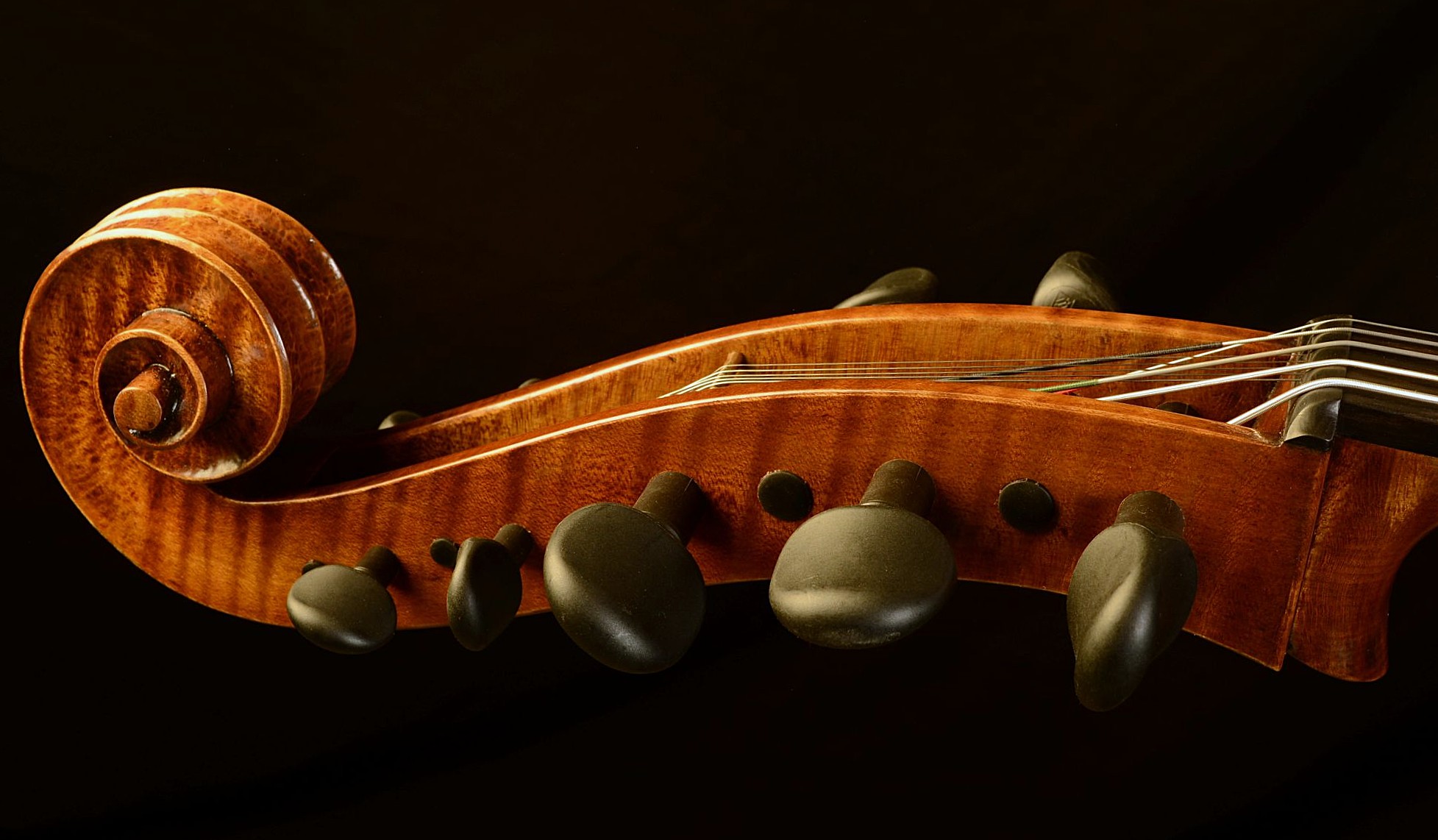
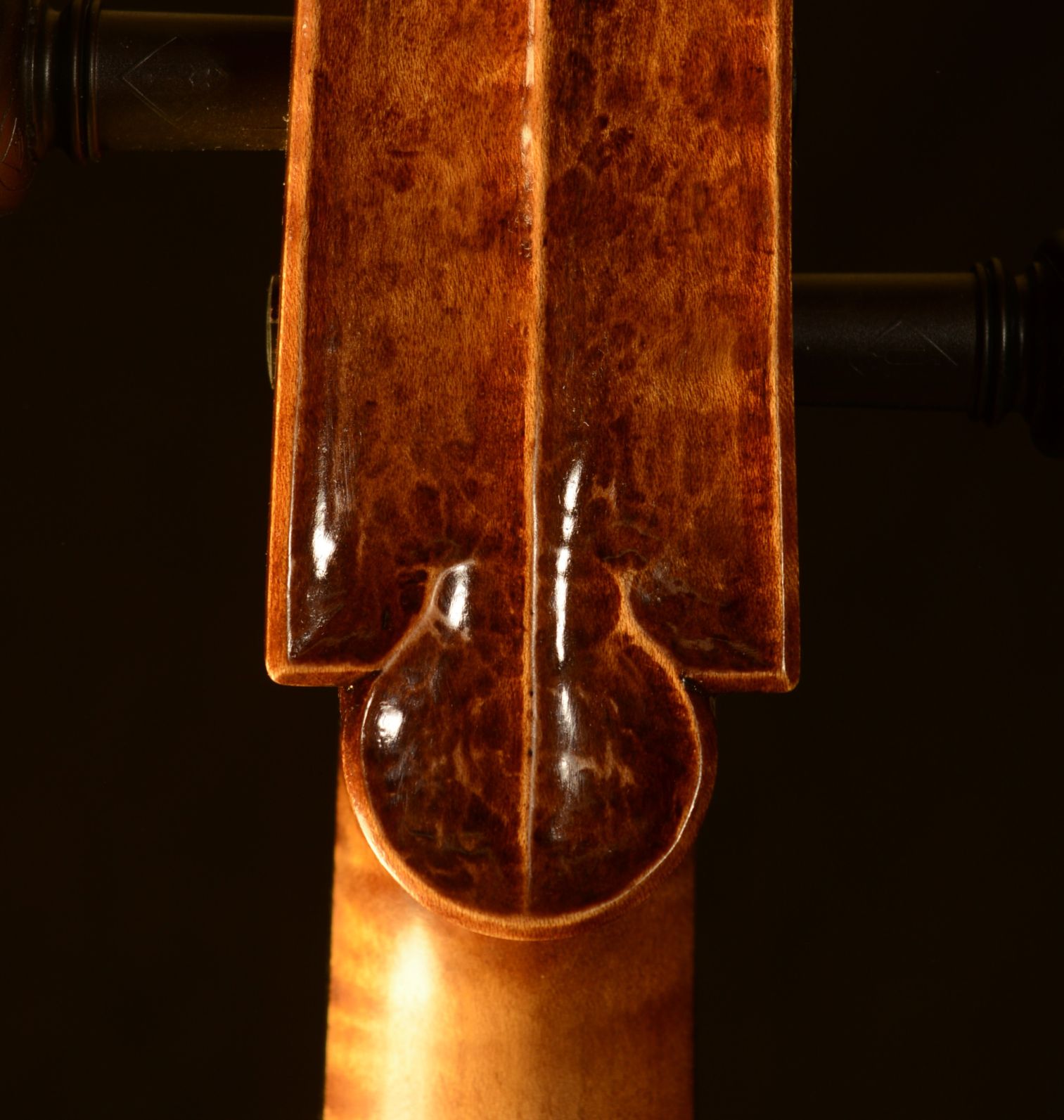
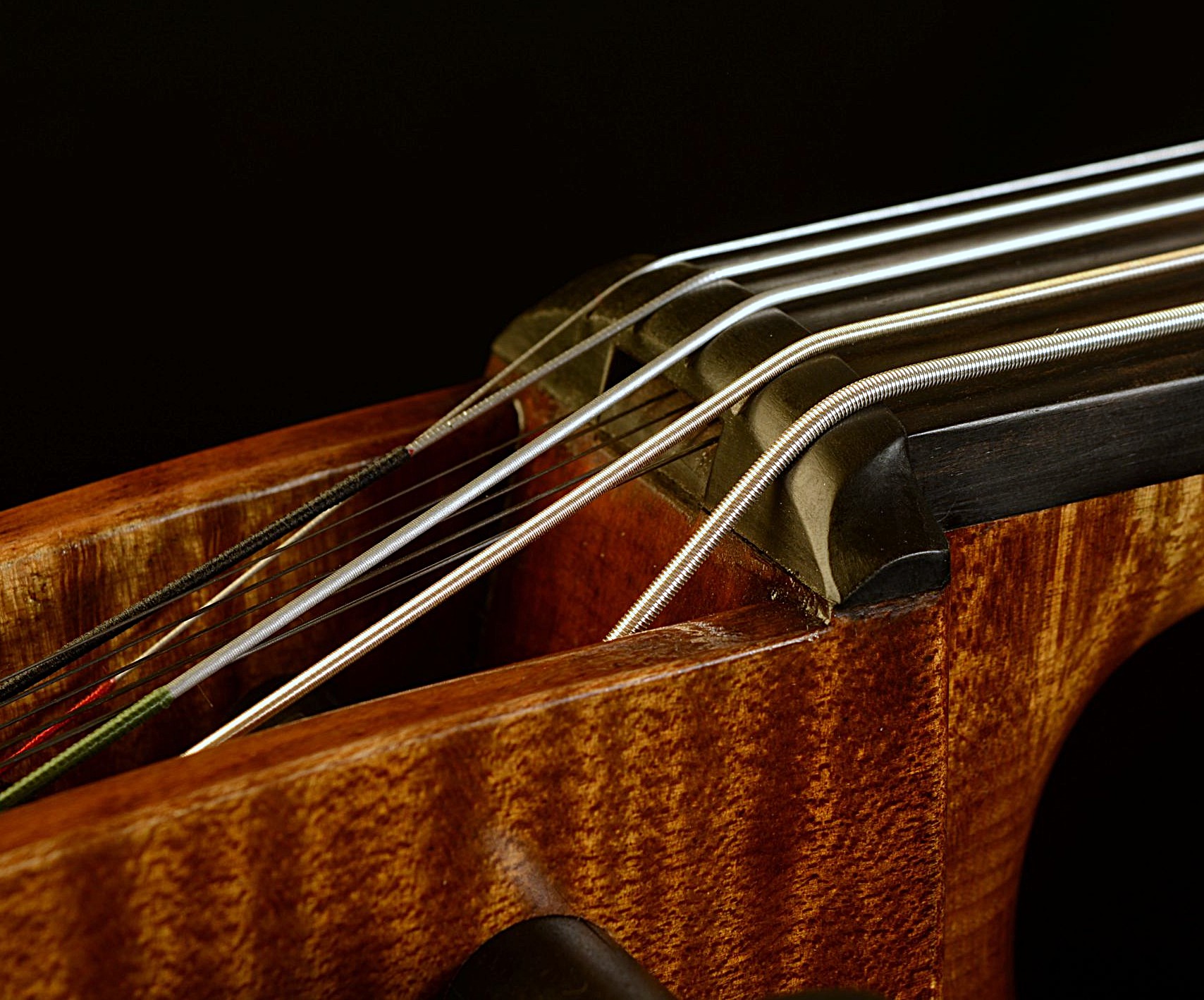
There is much to be said about the hardanger and cello d’amore. First some images, then explore the  text below to find out more.

Hardanger d'Amore Gallery

Cello d'Amore Gallery

Composer, musician, and professor, Dan Trueman asked Norwegian luthier, Salve Håkedal, to build him a variation on the hardanger fiddle with deeper resonances and 5 bowed strings along with 5 sympathetic strings. Salve made the body longer and wider than usual and extended the scale length and added a C-string. Dan got the instrument in 2010 and loved it. He soon showed it to Caoimhín Ó Raghallaigh who also fell in love with it and dubbed this new instrument the hardanger d’amore (HdA). Salve has made over 53 of them (as of May 2026) and has a very long waiting list.

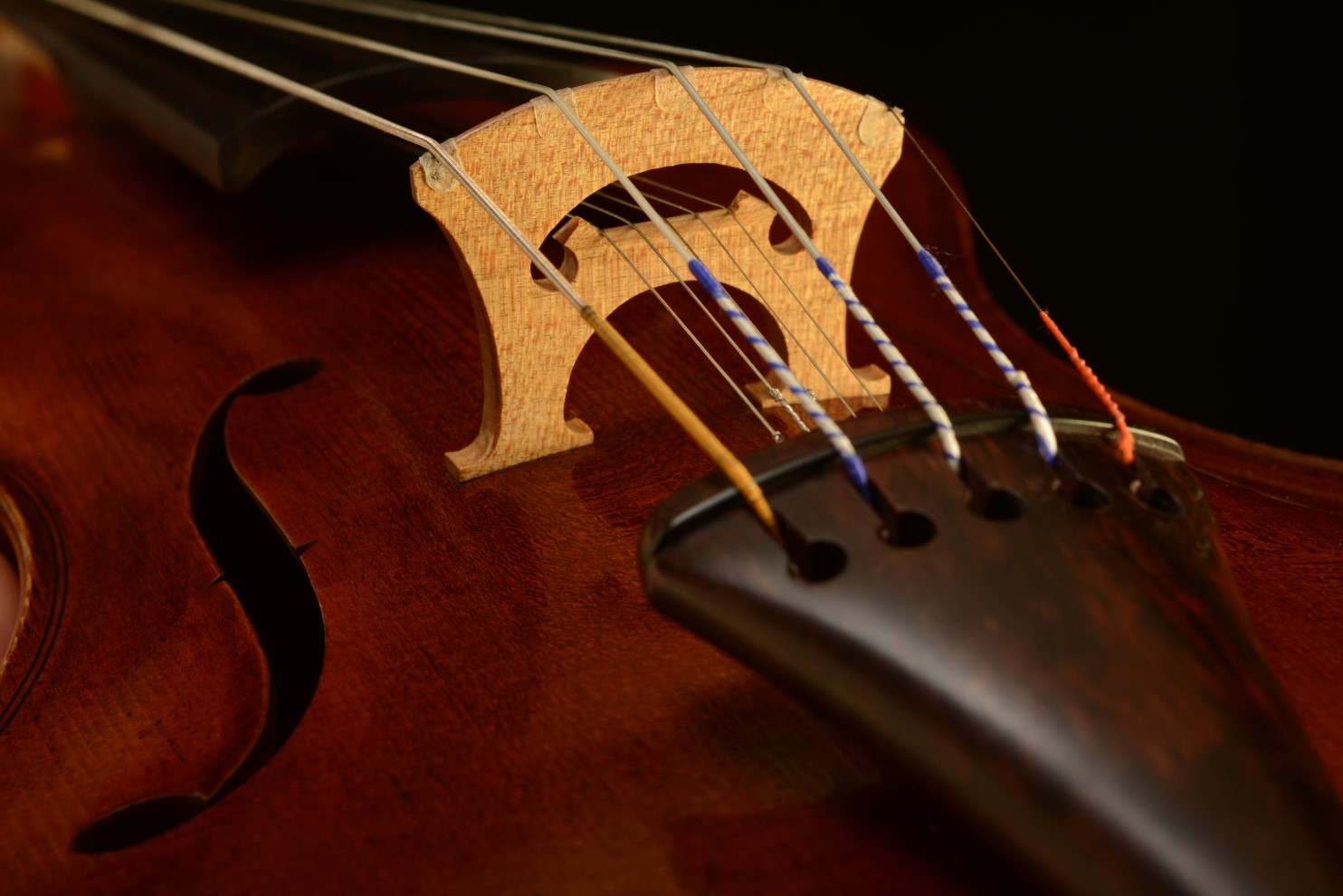
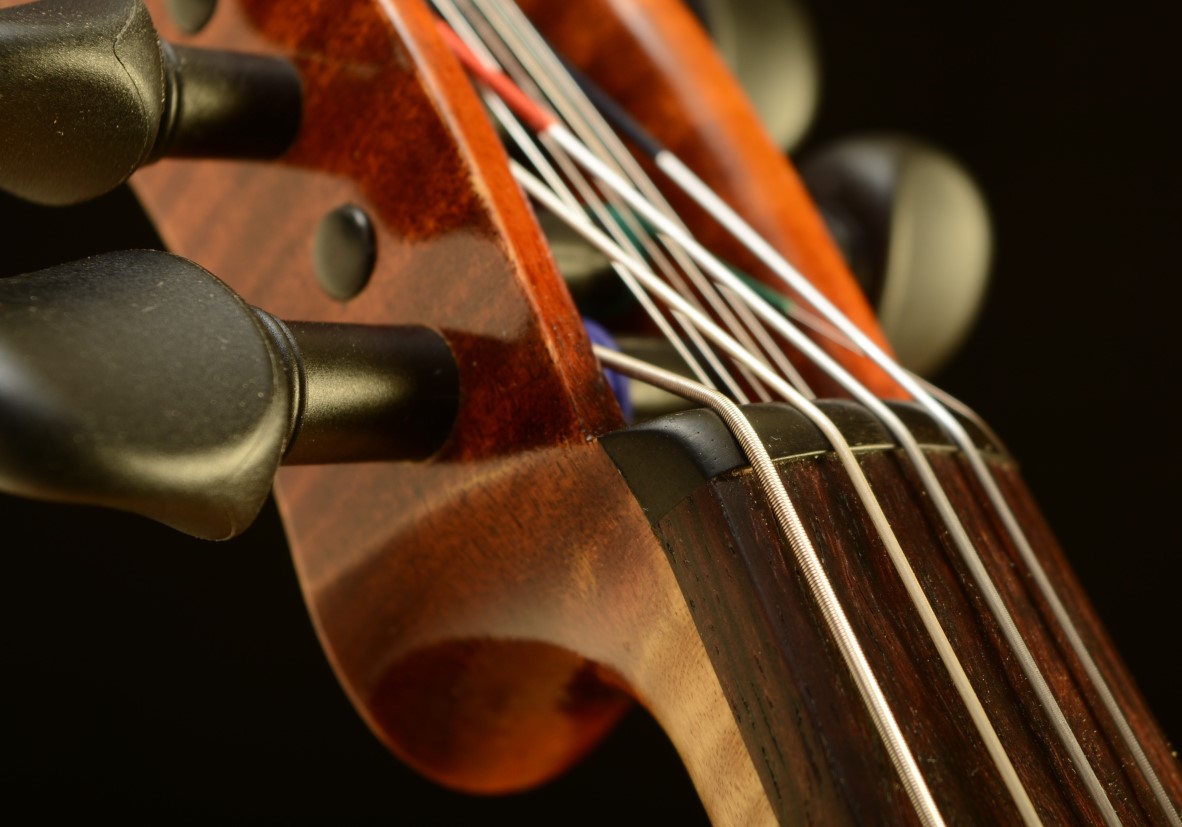
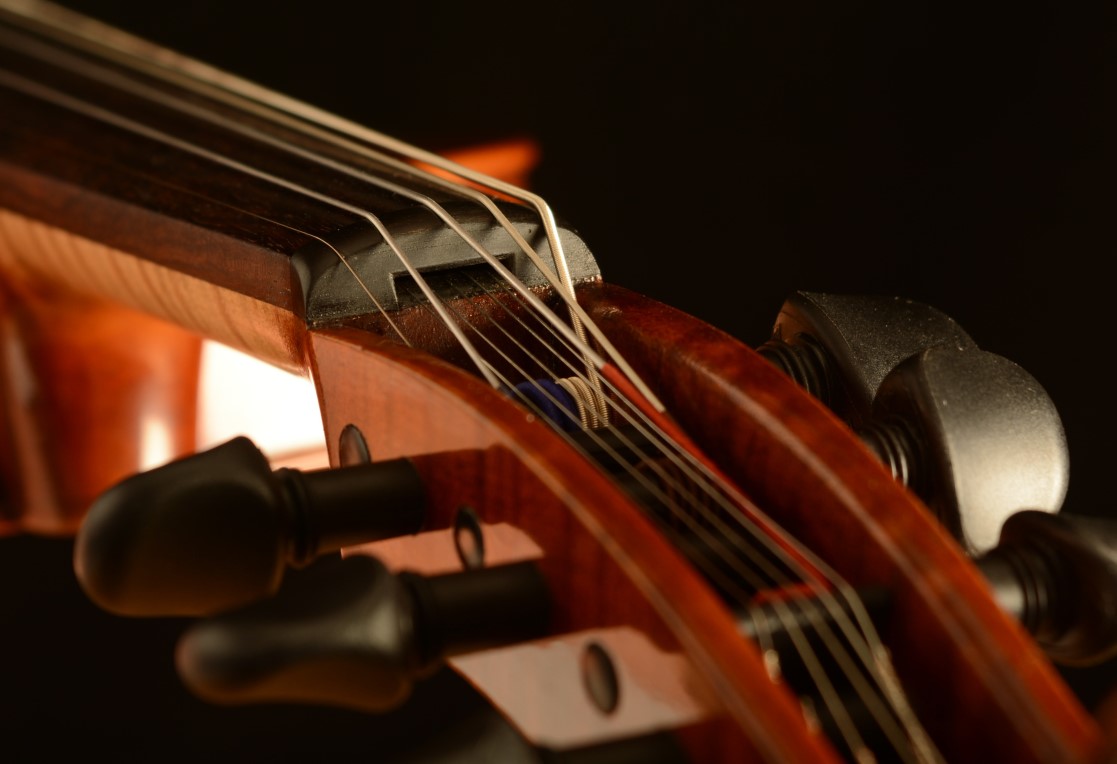
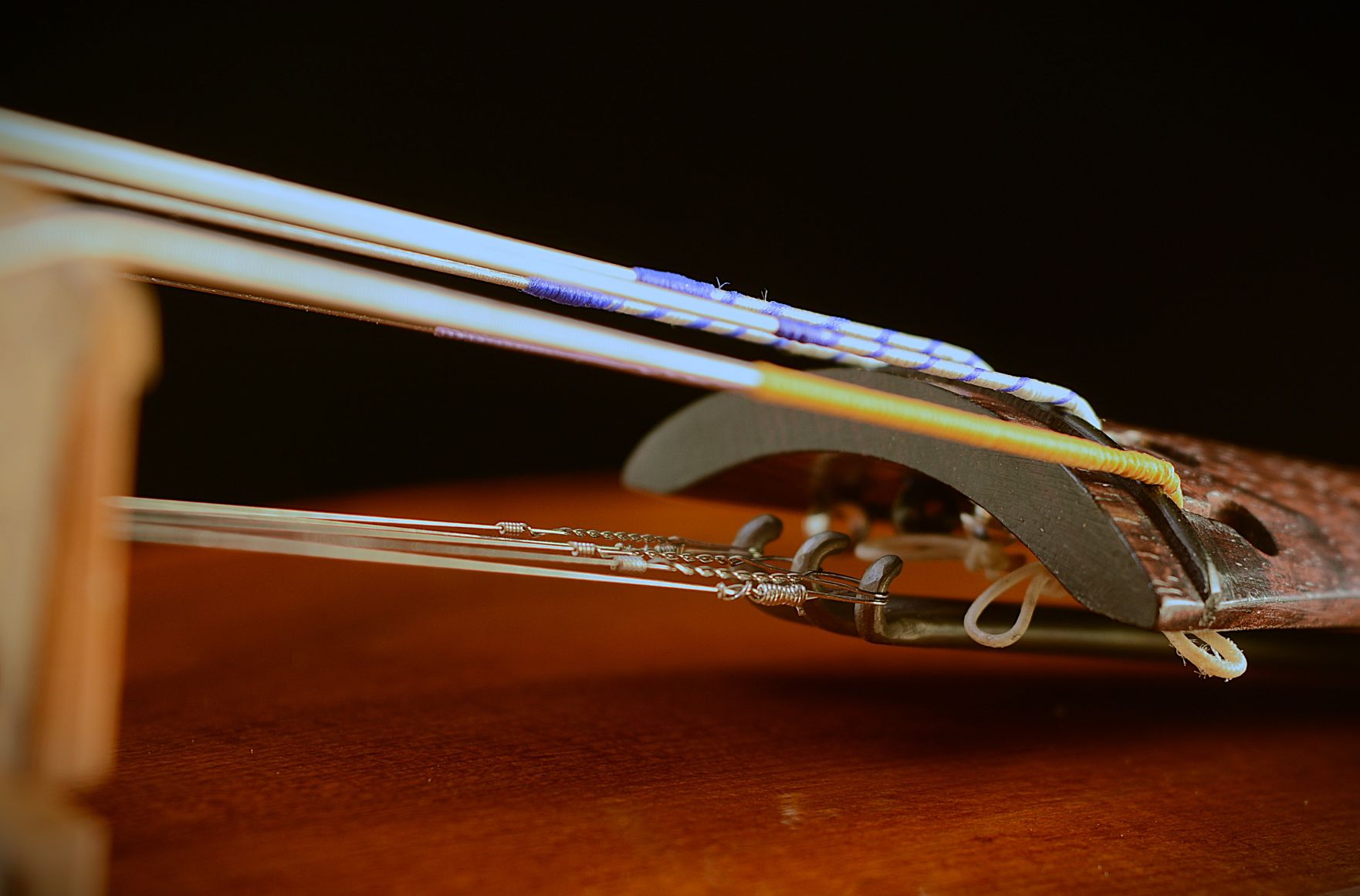
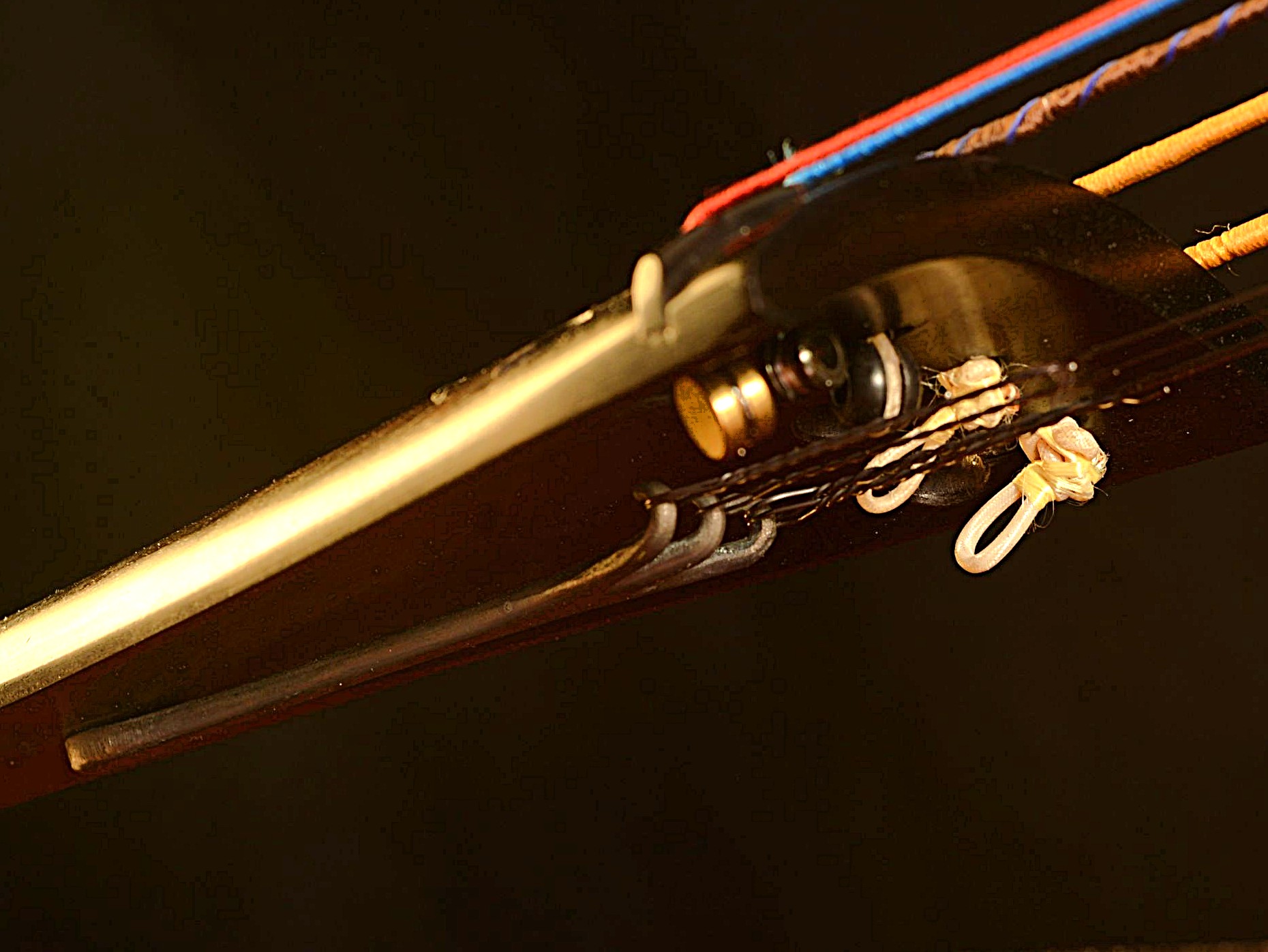
The instrument is about the size of a very small viola (15″L) with the scale length of a typical 4/4 violin. The neck is shorter and the fingerboard and bridge are flatter than a typical violin or viola. Gut strings to allow a wide range of scordatura/cross tunings — a key feature of the traditional hardanger fiddle.  The strings suit its resonances well and is likely the best choice to preserve the physical integrity of the HdA by keeping the string tension down. The under-strings are plain steel in a variety of gauges  designed to equalize tension between strings tuned to different pitches and help maximize their sympathetic response to the bowed strings. I use a custom-fabricated titanium 3-tined “fork” that plugs into the bottom of the tailpiece to anchor the under-strings.

The sound is ethereal and enveloping, intimate and engrossing.

My daughter Ledah met Dan  and also fell under the HdA spell. When she asked me to make one for her I demurred: a new batch of complexities to master and Salve makes beautiful instruments. I suggested she get on his waiting list (bad dad/practical dad).

A few months later I was delighted to hear from Dan that Salve was interested in helping me learn the specifics of the HdA. He wanted to widen their availability (that loooong waiting list, and he anticipates slowing down one of these days). Soon enough, with Salve’s mentorship, I built my first HdA for Ledah.

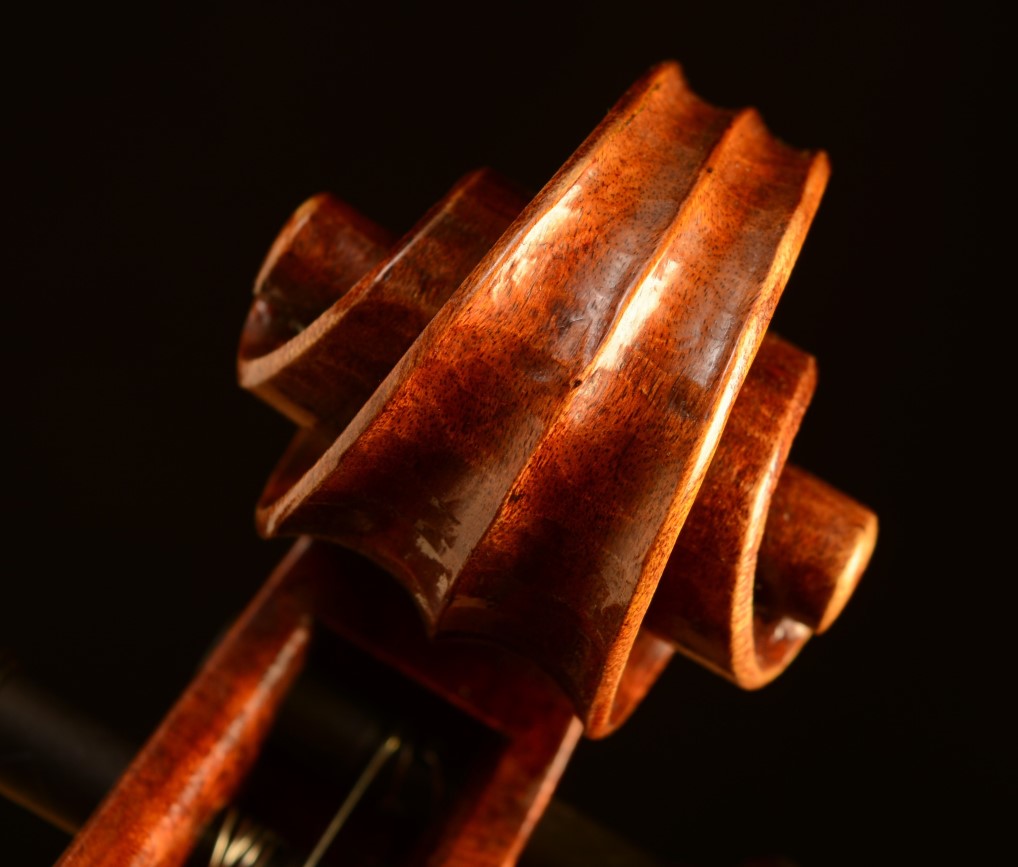
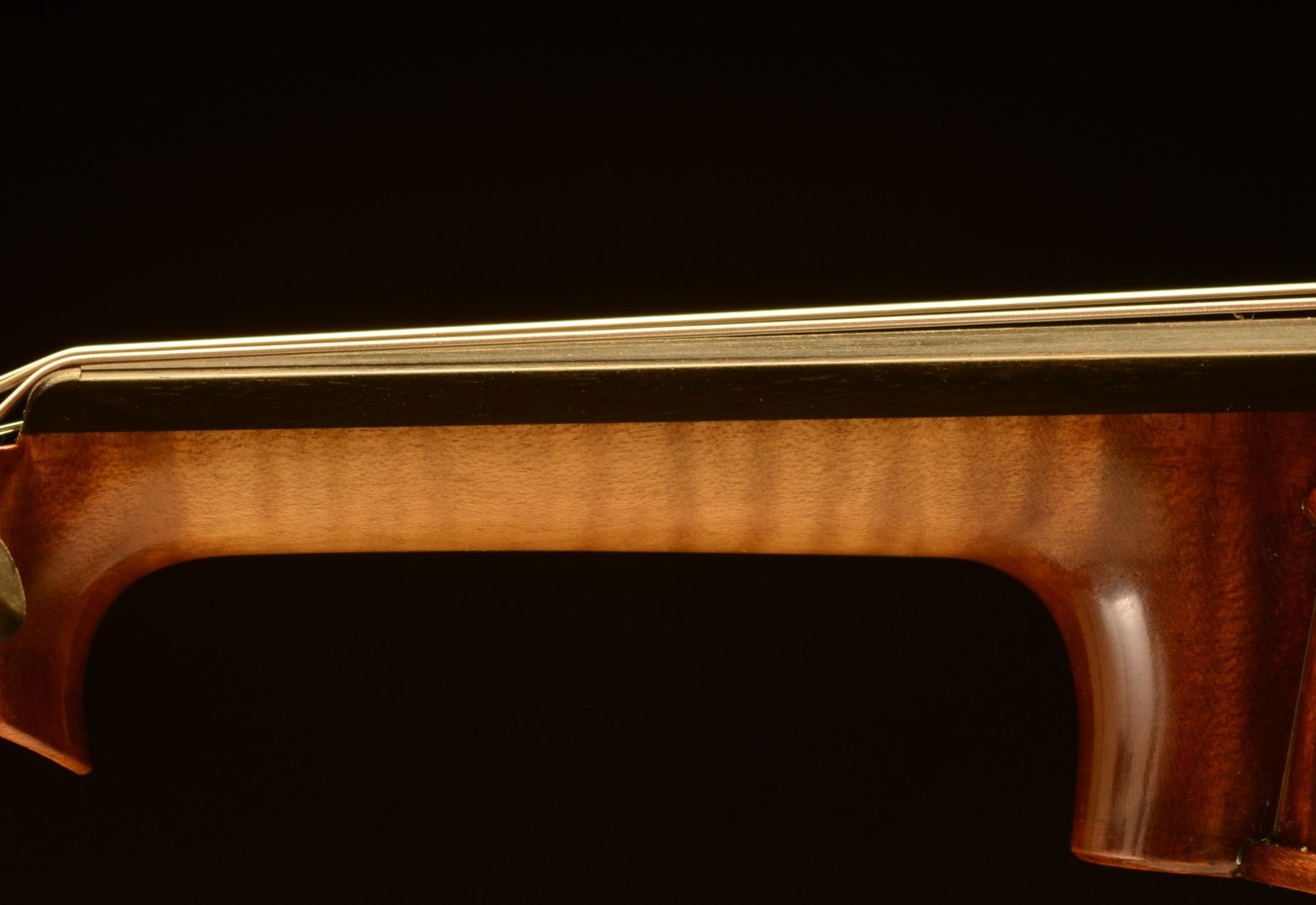
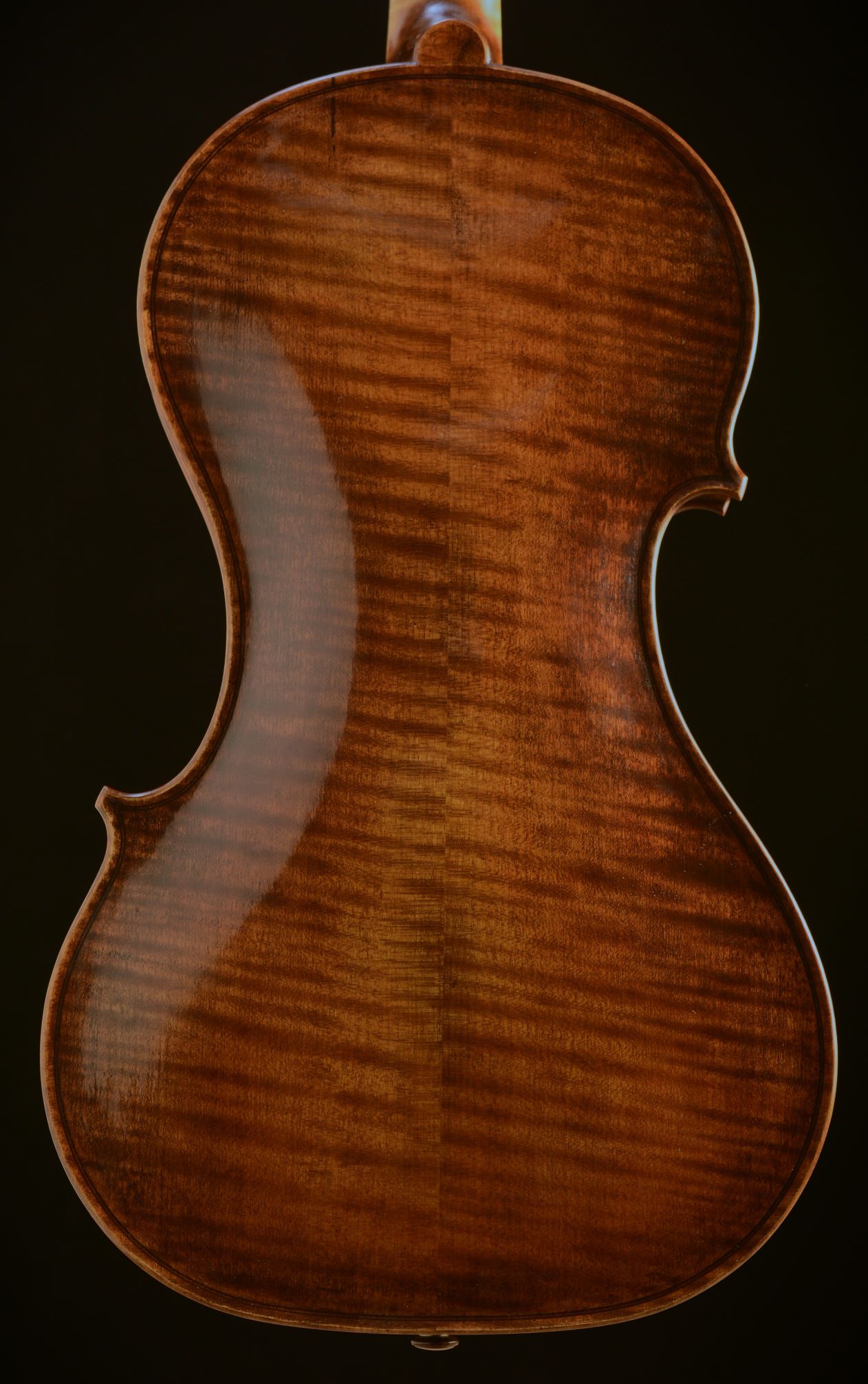
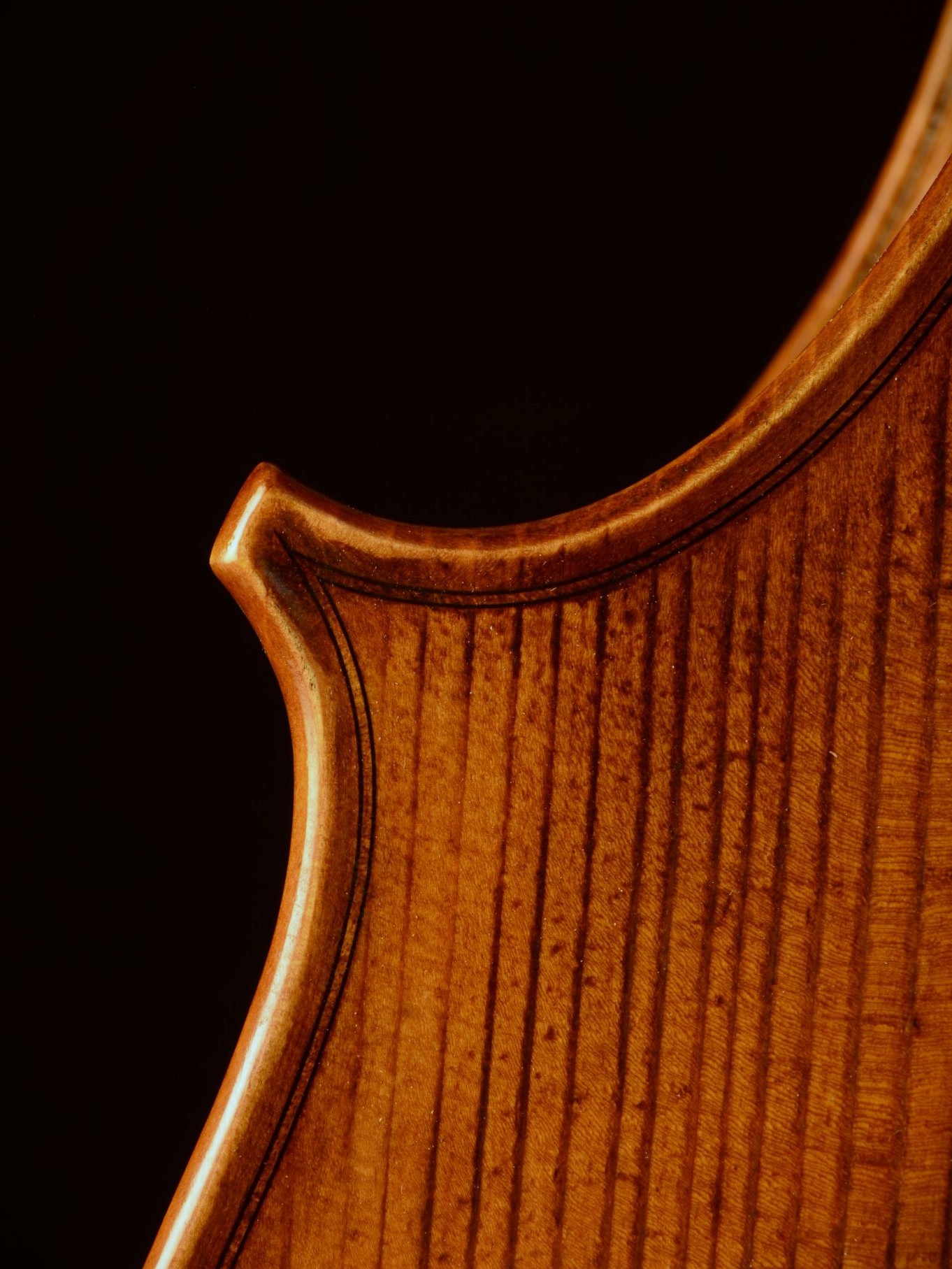
Salve took cues from Dan when conceiving the HdA and decided to take liberties with the traditional shape of the hardanger fiddle. He removed the upper bout corners, asymmetrically shaped the upper bouts, utilized traditional violin f-holes and scroll, and dispensed with the customary decorative rosing and inlay. 

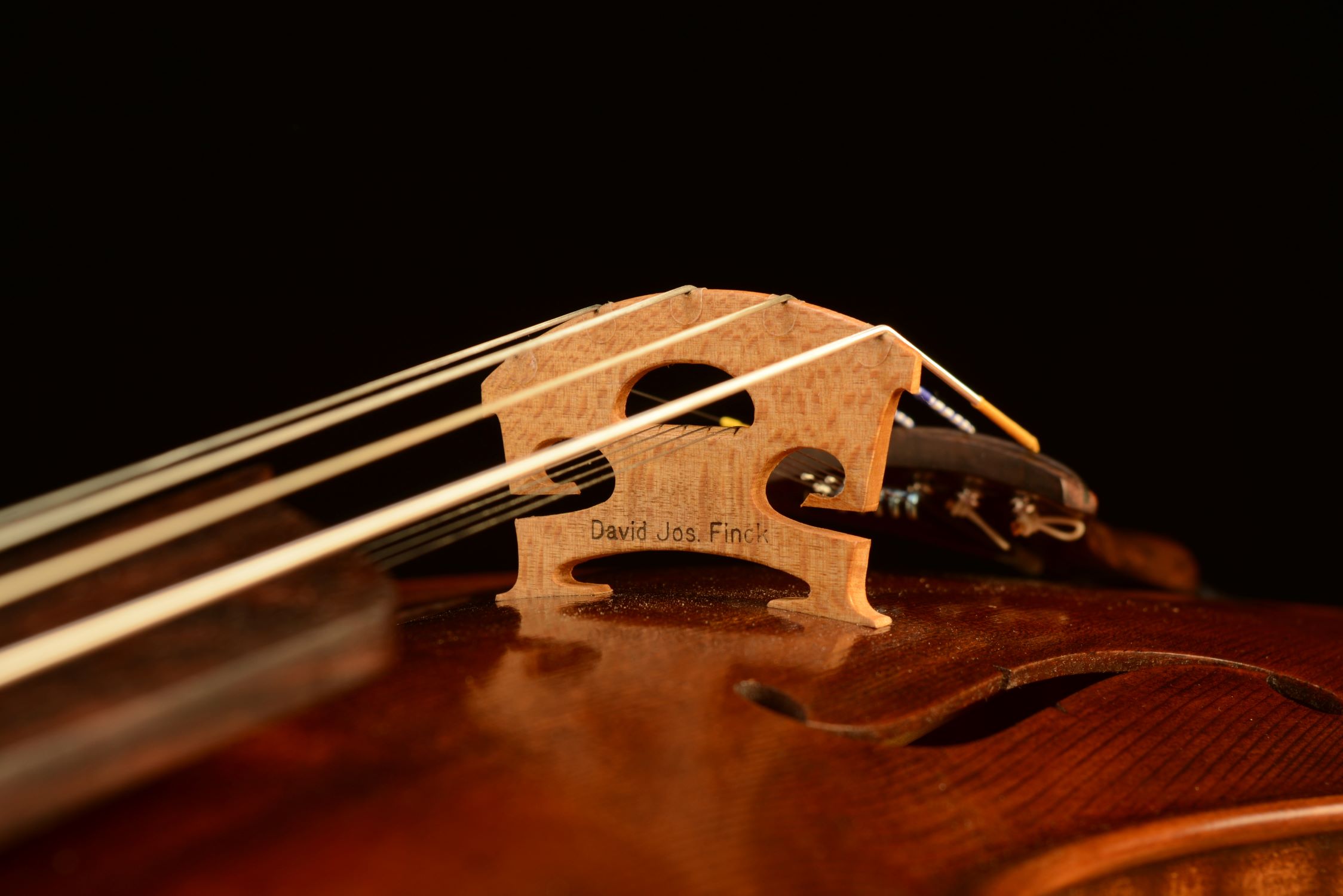
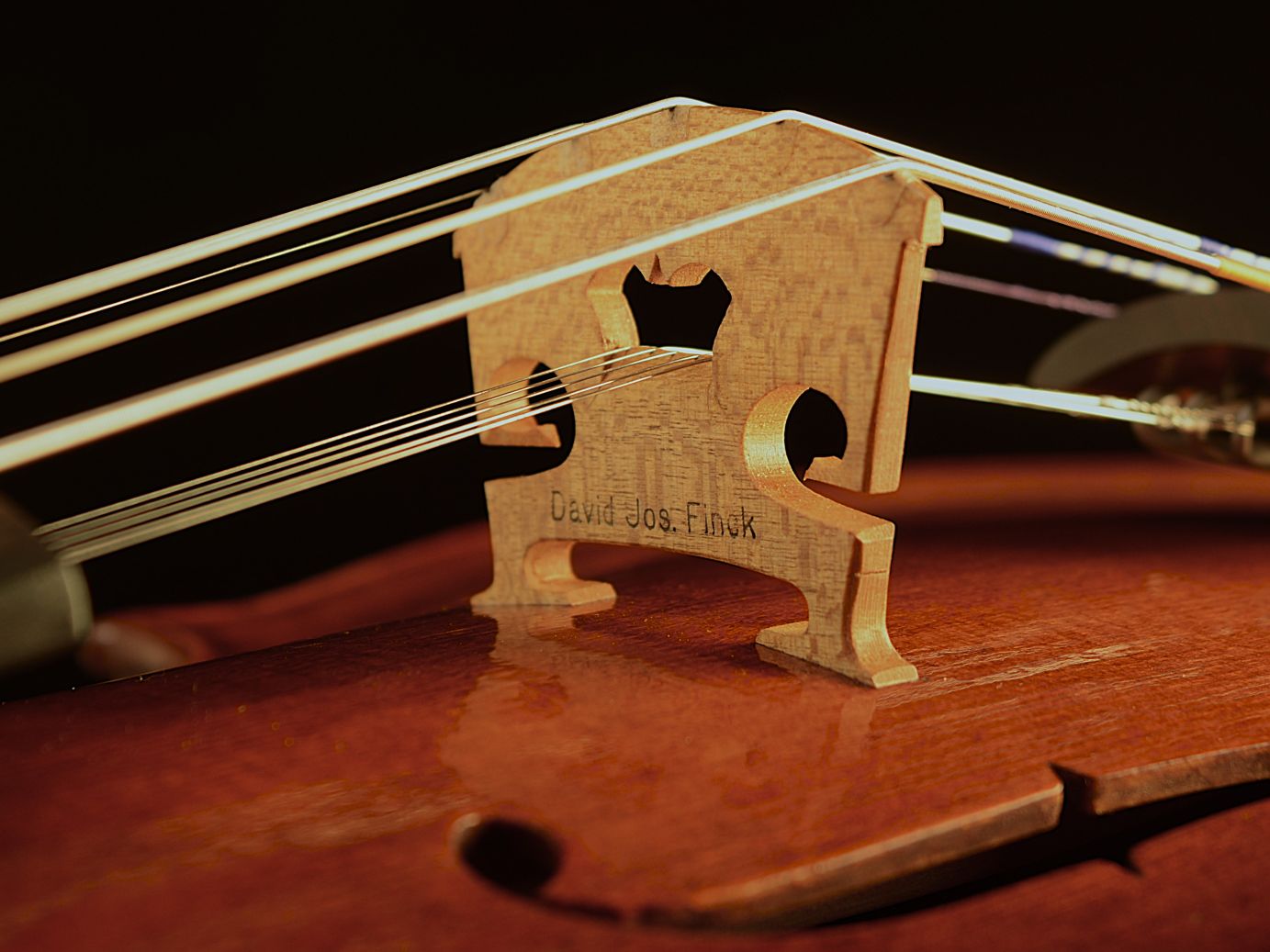
He urged me to make my own body shape, which I did. I also went my own way designing the f-holes to be suggestive of the traditional hardanger fiddle f’s. My bridge is a traditional classical viola bridge modified to accommodate the under-strings and shaped to echo a hardanger bridge. I believe this style of bridge offers enhanced resonance and responsiveness. And, for those who prefer a more traditional looking instrument, I also created a model of more typical 4-cornered violin appearance.

I’m indebted to Dan, Salve, and Ledah for guiding me into the magical mystery land of the HdA.

The cello d’amore (CdA) is another brain child of Dan Trueman’s born of his desire to write music and arrange folk tunes for a full quartet of these new instruments. We believe it is the first of its kind. The Bergamot Quartet is the destination of the first CdA along with another HdA by me and two more by Salve. Together Dan and Bergamot dub the endeavor Project Resonance.

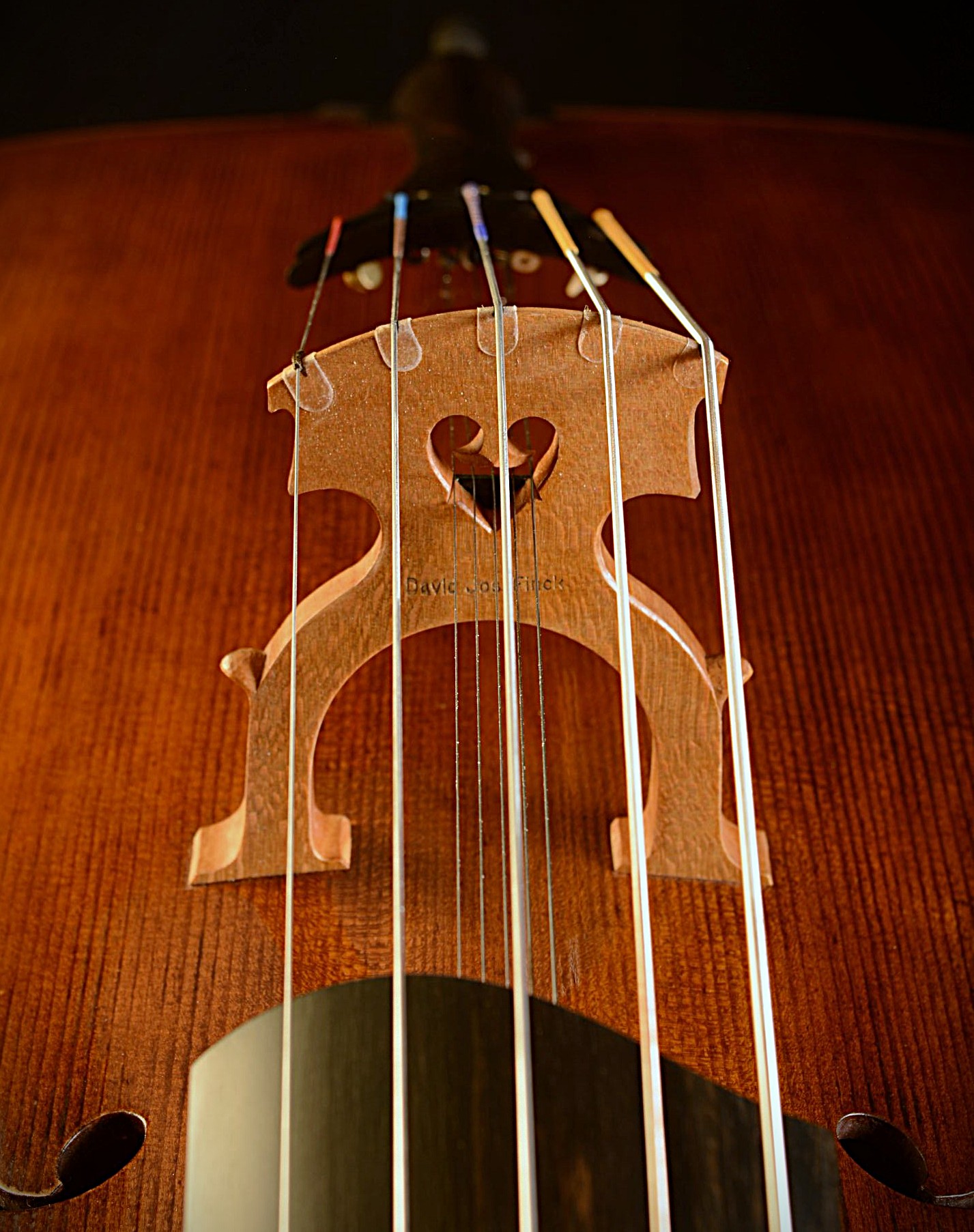
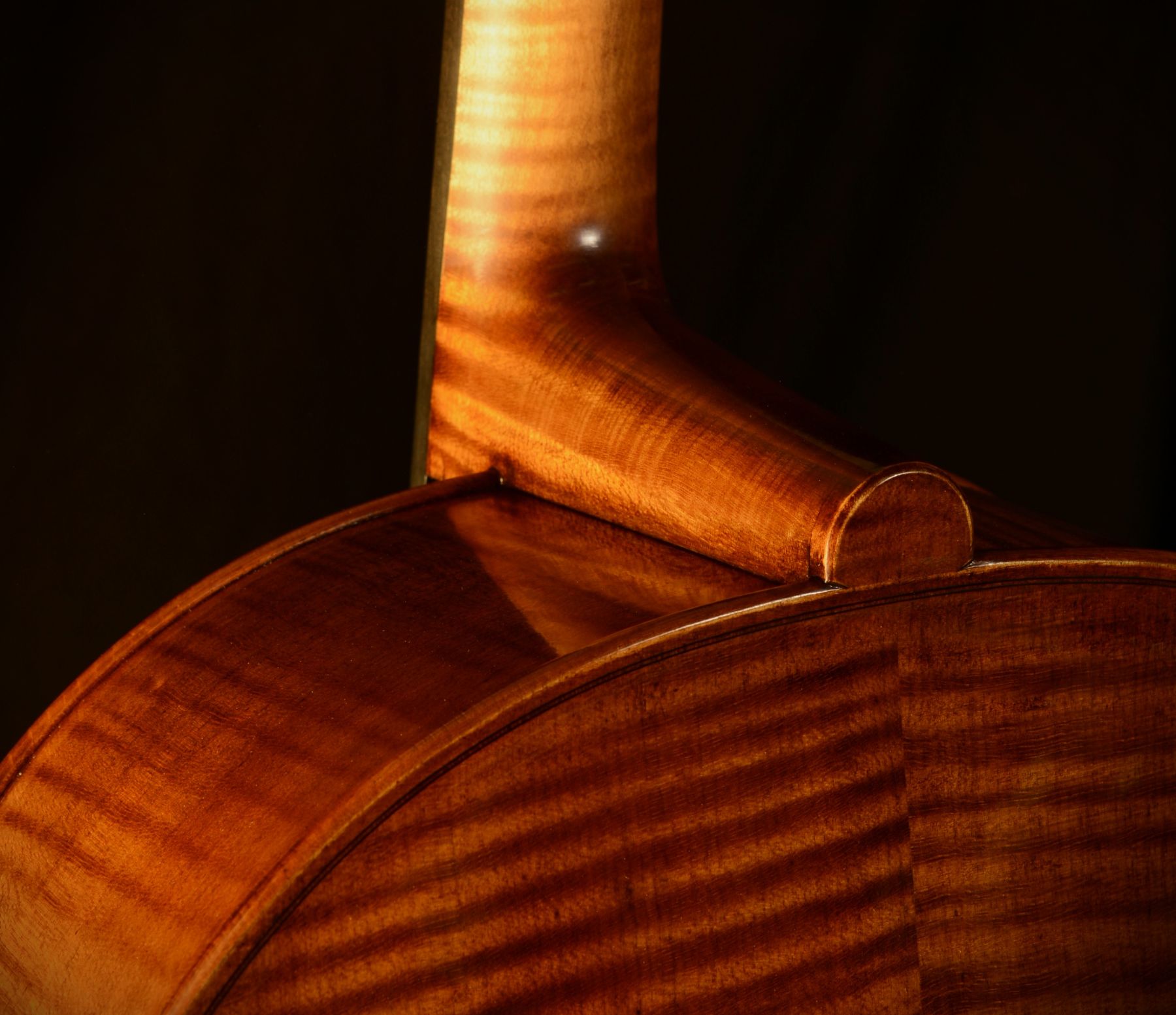
My CdA is primarily informed by my cello-making experience and seasoned by my HdA making. The body is adapted from my traditional cello. The shape came from my HdA but in mirror image so the cellist has the normal anchor point of the lower bass corner. Structurally, the body is strengthened to counter the stresses from 6 additional strings. I use a modified French hybrid bridge to handle the extra bowed string and the 5 additional sympathetic strings. The bridge arc is flattened to facilitate double-stop string crossings and ease bow arm ergonomics. The sympathetic strings anchor to the tailpiece with a custom-made titanium “fork” with three curved tines. It plugs into the bottom of the tailpiece. As with the HdA, the bowed strings are wound gut, with the possible exception of the E-string.  This suits the resonances of the instrument and keeps the total tension of the string load lower.